

The extrusion manufacturing process transforms raw materials into continuous profiles by forcing them through precisely shaped dies under high pressure. This process shapes everything from the PVC pipes under your sink to the aluminum frames in your windows, producing consistent cross-sections at remarkable speeds while maintaining tight tolerances and minimal waste.
What Makes Extrusion Different from Other Manufacturing Methods
Extrusion stands apart from traditional manufacturing by creating products with uniform cross-sections through continuous processing rather than discrete batches. The material flows through a die opening, adopting its exact shape as it exits. Think of squeezing toothpaste from a tube-the paste takes the circular shape of the opening and maintains that profile along its entire length.
The plastics segment dominated the global extrusion machinery industry with a market share of 77.2% in 2024 (Source: grandviewresearch.com, 2024), reflecting the process's versatility across materials. The global extrusion machinery market reached USD 8.93 billion in 2024 and projects growth to USD 11.58 billion by 2030 (Source: grandviewresearch.com, 2024), driven by increasing demand across packaging, construction, and automotive sectors.
Unlike injection molding, which creates complete discrete parts, or blow molding designed for hollow containers, extrusion excels at producing long lengths of material. The process achieves 90-98% material utilization rates (Source: la-plastic.com, 2023), significantly reducing waste compared to subtractive manufacturing methods. This efficiency, combined with energy costs as low as $0.05 to $0.10 per kilogram (Source: la-plastic.com, 2023), positions extrusion as one of the most economical high-volume manufacturing processes available.
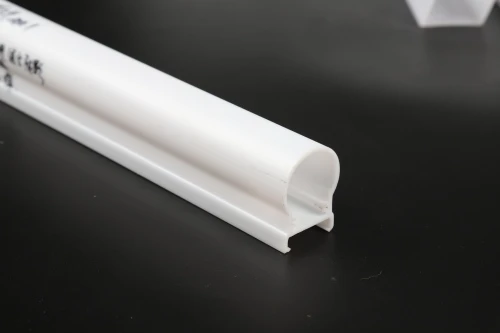
The Core Mechanism: How the Extrusion Manufacturing Process Works
At its heart, extrusion relies on plastic deformation-permanently reshaping materials by applying forces that exceed their yield strength. The process confines material in a sealed chamber, leaving only one exit: the die opening. When sufficient pressure builds, the material has nowhere to go but through this carefully designed aperture.
The Basic Process Flow
The journey begins when raw material enters a heated barrel containing a rotating screw. Plastic materials like powder, pellets, and granules feed from a hopper into the extruder barrel (Source: movacolor.com, 2024), where they encounter three distinct zones. The feed zone receives room-temperature material and begins moving it forward. The compression zone gradually reduces volume while applying heat, melting the material into a viscous fluid. Finally, the metering zone maintains consistent pressure and temperature, ensuring uniform flow into the die.
The screw's design determines processing quality. Its channels grow shallower from feed to discharge, building pressure as material progresses. Heater bands surrounding the barrel provide external heat, while the screw's rotation generates additional thermal energy through friction. This combination melts the material to precise viscosity-thick enough to hold shape after exiting the die, yet fluid enough to flow smoothly through the opening.
Temperature Control and Material Transformation
Temperature management separates successful extrusion from failed attempts. Too cold, and material won't flow properly, creating incomplete parts with weak spots. Too hot, and materials degrade, producing discolored products with compromised mechanical properties. Food extruders operate between 150°F to 290°F (Source: la-plastic.com, 2023) to preserve nutritional content, while aluminum requires 350-500°C for hot extrusion (Source: slideshare.net).
Modern extruders employ multiple temperature zones-typically four to six sections along the barrel length. Each zone maintains independent temperature control, creating a thermal gradient that optimizes material conditioning. Sensors continuously monitor melt temperature, triggering cooling fans or additional heating when values drift from setpoints. This precision enables consistent output quality across production runs lasting days or weeks.
Three Temperature Variations in Extrusion Manufacturing Process
Extrusion processes divide into hot, cold, and warm categories based on operating temperature relative to material properties. Each approach offers distinct advantages for specific applications and materials.
Hot Extrusion: Maximum Malleability
Hot extrusion operates above the material's recrystallization temperature, preventing work hardening and easing material flow through dies (Source: uark.pressbooks.pub, 2024). This elevated temperature range-sometimes exceeding 2000°C for refractory alloys-dramatically reduces the force required for deformation.
Common hot extrusion temperatures include 350-450°C for magnesium, 600-1100°C for copper, and 1200-1300°C for steel (Source: slideshare.net). The process uses horizontal hydraulic presses applying between 30 to 700 MPa of pressure. Lubrication becomes critical at these temperatures-oil or graphite works for moderate heat applications, while glass powder serves as lubricant for the hottest operations.
The primary tradeoff involves surface quality and dimensional control. Hot extrusion can produce complex cross-sections with relative ease, but the elevated temperatures may cause oxidation, surface scaling, or slight dimensional variations as the part cools. Despite these challenges, hot extrusion remains the most common approach because material deformation resistance drops significantly at high temperatures (Source: wikipedia.org, 2025).
Cold Extrusion: Precision and Strength
Cold extrusion occurs at room temperature or near room temperature, offering advantages including lack of oxidation, higher strength from cold working, closer tolerances, and better surface finish (Source: wikipedia.org, 2025). Materials commonly processed through cold extrusion include lead, tin, aluminum, copper, and steel.
The process demands significantly higher forces than hot extrusion-sometimes requiring presses exceeding 100,000 PSI. This intense pressure causes strain hardening, where the material's crystal structure deforms and entangles, actually increasing strength. Cold extrusion provides enhanced dimensional accuracy and surface smoothness, making it suitable for parts requiring close tolerances (Source: ud-machine.com, 2024).
Cold extrusion produces collapsible tubes, fire extinguisher cases, shock absorber cylinders, and gear blanks. The absence of heating eliminates thermal distortion, enabling precision impossible with hot processes. However, material ductility limits cold extrusion's capabilities-brittle materials crack rather than flow, and even ductile materials may require intermediate annealing steps during multi-stage processes.
Warm Extrusion: The Balanced Approach
Warm extrusion operates at temperatures between cold and hot extrusion, typically 300°C to 500°C for non-ferrous materials like aluminum or copper alloys (Source: la-plastic.com, 2024). This middle ground balances material flow characteristics with mechanical property development.
Warm extrusion allows lower forces and higher speeds than cold extrusion while maintaining better surface quality and dimensional accuracy than hot extrusion (Source: uark.pressbooks.pub, 2024). The process delivers faster cycle times than cold methods without the energy costs and surface defects associated with fully hot operations. The primary challenge involves maintaining the precise temperature window-even small deviations can significantly impact product consistency.
Direct vs. Indirect: Two Fundamental Approaches
Beyond temperature considerations, extrusion divides into forward (direct) and backward (indirect) methods based on material flow direction relative to ram movement.
Direct Extrusion Mechanics
In direct extrusion, the metal billet sits in a container and a ram pushes it through the die, with both container and die moving in the same direction (Source: uark.pressbooks.pub, 2024). This creates friction between the billet and container walls, increasing force requirements and potentially affecting surface finish.
Direct extrusion remains the most economical and widely used method. Its simpler equipment design reduces capital costs, while the straightforward mechanical arrangement simplifies maintenance. The process excels at producing long products-pipes, rods, and structural shapes measuring many meters in length.
Indirect Extrusion Benefits
In indirect extrusion, the billet remains stationary while the die moves toward it through a hollow ram, with metal flowing backwards through the ram opening (Source: uark.pressbooks.pub, 2024). This arrangement eliminates friction between billet and container walls, reducing required force by 25-30% and improving surface quality.
The reduced friction translates directly to longer die life and better dimensional consistency. Indirect extrusion produces superior surface finishes without secondary operations. However, the more complex equipment costs more initially and limits maximum product length due to ram design constraints.
Specialized Extrusion Variations
Standard extrusion methods adapt to specific challenges through specialized techniques addressing unique material characteristics or product requirements.
Hydrostatic Extrusion
Hydrostatic extrusion surrounds the billet completely with pressurized liquid, typically oil, which transmits force from the ram while preventing direct container contact (Source: wikipedia.org, 2025). The fluid cushion eliminates friction entirely, permitting higher extrusion ratios and lower processing temperatures.
This method enables processing of brittle materials that would crack under conventional approaches. The uniform pressure distribution prevents stress concentrations that initiate fractures. Hydrostatic extrusion demands specialized seals and pumping systems to maintain fluid pressure, increasing complexity and cost. Despite this, it remains valuable for difficult materials and high-precision applications.
Co-Extrusion: Multiple Materials, Single Product
Co-extrusion combines two or more thermoplastic melt streams from separate extruders into a single extrusion head, enabling products with different material layers meeting various functional requirements (Source: movacolor.com, 2024). This technique creates products impossible with single-material processing.
Consider multi-layer packaging films. The outer layer provides printability and appearance, the middle layer delivers barrier properties blocking oxygen or moisture, and the inner layer ensures food safety and seal strength. Each layer flows at carefully controlled speeds and thicknesses, merging just before the die to form a unified structure.
Co-extrusion expands design possibilities dramatically. UV-resistant outer layers protect degradable inner materials. Colored surface layers reduce expensive pigment use in structural cores. Cost-effective materials bulk up products while premium surfaces maintain quality appearance.
Where Extrusion Powers Modern Manufacturing
The extrusion process serves remarkably diverse industries, each leveraging its unique combination of efficiency, consistency, and design flexibility.
Construction and Building Materials
The building and construction sector accounted for over 60% of aluminum extrusion market revenue in 2024 (Source: grandviewresearch.com). Window frames, door assemblies, curtain walls, and structural components rely on extruded profiles. Single-screw extruders held 62.7% market share in 2024, dominating pipe and profile production (Source: grandviewresearch.com).
PVC pipes represent a massive application. Municipal water systems, residential plumbing, electrical conduit, and drainage systems consume millions of tons of extruded PVC annually. The process creates pipes ranging from 10mm diameter household plumbing to 2-meter storm water mains, all maintaining consistent wall thickness and pressure ratings.
Deck railings, fencing, and weatherstripping demonstrate extrusion's ability to create complex profiles impossible with other methods. A single pass through a carefully designed die produces integrated mounting channels, snap-fit features, and drainage paths that would require assembly from multiple stamped or molded components.
Automotive Applications
The automotive sector increasingly adopts extruded components to improve fuel efficiency through weight reduction (Source: grandviewresearch.com, 2024). Aluminum extrusions replace steel in structural members, reducing weight while maintaining crash safety performance. Door frames, bumper reinforcements, and roof rails showcase lightweight strength.
Weatherstripping, window channels, and trim pieces use extruded rubber and thermoplastic elastomers. A typical vehicle contains 50-100 meters of various extruded sealing profiles preventing water and air infiltration. The process's ability to integrate multiple functions-sealing, mounting, and decoration-into single continuous profiles reduces assembly complexity and vehicle weight.
Interior applications expand continuously. Dashboard supports, seat frame components, and center console structures increasingly use extruded aluminum or reinforced thermoplastics. Transmission housings, chassis panels, engine blocks, and roof rails incorporate aluminum shapes in vehicles (Source: grandviewresearch.com) as manufacturers pursue aggressive lightweighting targets.
Packaging Industry Growth
The packaging segment expects 5.3% CAGR growth through the forecast period due to rising demand for flexible and rigid plastic packaging solutions (Source: grandviewresearch.com, 2024). E-commerce expansion drives this growth-online retailers need lightweight, protective packaging materials that minimize shipping costs while preventing product damage.
Blown film extrusion creates the plastic bags, stretch wrap, and shrink film protecting products during transport and storage. The accelerating online retail sector boosts demand for high-clarity blown-film formats (Source: mordorintelligence.com, 2025). Sheet extrusion produces rigid containers, clamshell packaging, and thermoformed trays used throughout food service and consumer goods.
Medical packaging represents a specialized growth area. Davis-Standard introduced clean-in-place food extruders in 2024 and launched high-speed dual-strand extruders for medical tubing in 2025 (Source: futuremarketinsights.com, 2025), where wall thickness and tolerance precision prove critical for catheter and IV tube applications.

Emerging Applications
Food extrusion produces pastas, breakfast cereals, premade cookie dough, pet food, and ready-to-eat snacks (Source: wikipedia.org, 2025). The process cooks, shapes, and texturizes ingredients simultaneously. Modern food extruders produce up to 2,000 kg of product per hour with production costs ranging from $0.10 to $0.50 per kilogram (Source: la-plastic.com, 2023).
Wire and cable industries consume vast quantities of extruded insulation. Copper conductors receive precise polymer coatings protecting against moisture, abrasion, and electrical breakdown. The extrusion process applies insulation at speeds exceeding 1,000 meters per minute while maintaining exact thickness requirements mandated by electrical codes.
Key Advantages Driving Industry Adoption
Manufacturers choose extrusion over alternative processes for compelling economic and technical reasons that compound across high-volume production environments.
Production Efficiency at Scale
Automated extrusion lines run 24/7 with minimal supervision, maximizing production output while reducing labor costs (Source: la-plastic.com, 2023). Once parameters stabilize, lines operate for days or weeks without intervention beyond material loading and finished product removal. This continuous nature eliminates the start-stop inefficiencies plaguing batch processes.
A single extrusion line produces thousands of meters of product per shift. High-speed lines exceed 100 meters per minute for simple profiles like film or sheeting. Even complex profiles with multiple cavities or intricate cross-sections maintain production rates unachievable through molding or fabrication methods.
Changeover times remain remarkably short. Switching colors requires only purging residual material-typically 15-30 minutes. Profile changes need die replacement, accomplished in 1-3 hours including setup and optimization. This flexibility enables economic production across diverse product portfolios without dedicated equipment for each SKU.
Material Utilization and Waste Reduction
The plastic extrusion process uses thermoplastics that undergo melting and hardening, allowing waste to be reused and reducing raw material and disposal costs (Source: plasticextrusiontech.net, 2025). Setup scrap, edge trim, and rejected parts grind and remix into production batches. Many operations achieve near-zero landfill waste through closed-loop recycling.
The continuous nature minimizes startup waste. Injection molding discards dozens or hundreds of shots while optimizing parameters. Extrusion reaches stable output within minutes, generating minimal scrap during startup and shutdown cycles. Over multi-day production runs, this difference becomes substantial.
Material consumption exactly matches product requirements. The die opening determines cross-section-no excess material requires trimming away. For hollow profiles, mandrels or internal tooling create cavities directly, eliminating secondary operations that generate additional scrap.
Design Flexibility and Customization
Plastic extrusion provides flexibility and versatility, producing complex shapes with varying thickness, textures, and colors as long as the cross-section remains consistent (Source: plasticextrusiontech.net, 2025). Die design determines profile geometry-adding internal channels, mounting features, or reinforcement ribs requires only tooling changes, not equipment replacement.
Hollow profiles demonstrate this flexibility. A window frame extrusion might integrate glazing channels, drainage paths, hardware mounting points, and thermal breaks into a single continuous profile. Fabricating equivalent functionality from flat stock would require cutting, bending, welding, and assembling multiple components.
Surface texturing applies through die design or post-extrusion embossing. Matte, glossy, wood-grain, or patterned finishes suit different aesthetic requirements without changing base material. Color matching achieves precise brand standards through pigment dosing systems introducing colorants into the melt stream.
Cost-Effectiveness Across Volume Ranges
New extrusion lines cost USD 300,000-500,000 with auxiliary equipment adding approximately USD 27,500 (Source: mordorintelligence.com, 2025), representing significant capital investment. However, the high output rates and minimal per-unit costs deliver rapid payback for moderate to high production volumes.
Tooling costs favor extrusion over injection molding for longer parts. Injection molds for 1-meter products become prohibitively expensive, while extrusion dies cost $5,000-$50,000 regardless of product length. This fixed tooling investment amortizes across essentially unlimited length, dramatically reducing per-unit costs.
Operating costs remain low throughout production life. Energy consumption stays moderate-the continuous process avoids repeated heating and cooling cycles. Labor requirements stay minimal with automation handling most tasks. Maintenance focuses on wear items like screws, barrels, and dies following predictable replacement schedules.
Current Limitations and Design Constraints
Despite its advantages, extrusion faces inherent limitations that designers must acknowledge when evaluating manufacturing options.
Cross-Section Consistency Requirement
The fundamental principle creating extrusion's efficiency-continuous processing through a fixed die-also defines its primary constraint. The cross-section must remain constant along the product's entire length. Features varying in the longitudinal direction require post-extrusion operations like cutting, drilling, or assembly.
This limitation excludes many product types. Complex three-dimensional shapes with varying geometry need injection molding, blow molding, or additive manufacturing. Products requiring enclosed cavities accessible only from one end can't be extruded-the die couldn't support internal features without continuous support.
Profile complexity can be roughly quantified by calculating the shape factor-the amount of surface area generated per unit mass of extrusion-which affects both tooling cost and production rate (Source: wikipedia.org, 2025). Highly complex profiles with thin walls, deep pockets, or numerous protrusions challenge material flow, potentially requiring slower speeds or special processing conditions.
Material and Property Restrictions
High initial setup and maintenance costs associated with extrusion equipment pose substantial challenges, especially for small and medium-sized enterprises (Source: mordorintelligence.com, 2025). Rising interest rates have increased borrowing costs, prompting many processors to retrofit aging equipment rather than purchase new capacity.
Not all materials extrude successfully. The material must exhibit sufficient ductility or melt flow to survive forcing through the die without fracturing or degrading. Highly brittle materials crack under extrusion forces. Materials with very high melting points may exceed equipment capabilities or die material temperature limits.
Molecular orientation develops during extrusion as polymer chains align along the flow direction. This creates anisotropic properties-strength differs in extrusion direction versus perpendicular to flow. For applications requiring uniform properties in all directions, this directional variation becomes problematic.
Economic Volume Thresholds
While extrusion excels at high volumes, low-volume applications face economic headwinds. Equipment-as-a-service packages cover less than 8% of global installations (Source: mordorintelligence.com, 2025), leaving most operations requiring full capital investment upfront. Dies, while cheaper than injection molds, still represent $5,000-$50,000 per profile.
Setup and optimization consume 2-4 hours even for experienced operators. At low volumes, this non-productive time constitutes a larger percentage of total production time. Batch processes like machining or 3D printing may prove more economical for quantities below several hundred units.
Material minimums create additional challenges. Many resin suppliers set minimum order quantities of 1,000-5,000 kilograms. Small-scale operations struggle to afford inventory or accommodate storage requirements for these quantities, especially when producing multiple colors or formulations.
Looking Forward: Technology and Sustainability Trends
The extrusion industry evolves through automation integration, material innovation, and sustainability imperatives reshaping manufacturing priorities worldwide.
Industry 4.0 and Smart Manufacturing
Industry 4.0 and smart manufacturing drive North American extrusion machinery market growth through integration of digital technologies into manufacturing processes (Source: polarismarketresearch.com). Sensors throughout extrusion lines monitor temperature, pressure, dimensions, and material properties in real-time. KraussMaffei introduced AI-enabled melt pressure regulation systems in 2024 that enhance product consistency in pipe extrusion, adding digital twin interfaces in 2025 for real-time diagnostics and lifecycle forecasting (Source: futuremarketinsights.com, 2025).
Predictive maintenance systems analyze vibration patterns, temperature trends, and power consumption to anticipate equipment failures before they occur. This prevents costly unplanned downtime while optimizing maintenance schedules around production requirements rather than arbitrary time intervals.
Process optimization reaches new sophistication levels. Machine learning algorithms identify relationships between processing parameters and output quality that human operators miss. These systems automatically adjust screw speed, temperatures, and cooling rates to maintain target specifications despite raw material variations or ambient condition changes.
Sustainability and Circular Economy
Growing emphasis on sustainability and recycling prompts manufacturers to adopt innovative extrusion solutions, with increasing awareness about plastic waste environmental impact driving consumer and government demands for sustainable practices (Source: grandviewresearch.com, 2024). The EU's Packaging and Packaging Waste Regulation mandates escalating recycled-content thresholds, forcing converters to re-validate product specifications (Source: mordorintelligence.com, 2025).
Equipment manufacturers respond with machinery optimized for recycled content processing. Milacron added custom screw and barrel machining services in late 2025 to enhance machinery performance when processing post-consumer recyclate (Source: futuremarketinsights.com, 2025). Recycled materials present processing challenges-contamination, inconsistent properties, and degraded molecular structures complicate processing compared to virgin resins.
Bioplastics gain traction despite higher costs and processing complexity. Materials derived from corn, sugarcane, or algae offer renewable alternatives to petroleum-based polymers. While processing requirements often mirror conventional plastics, some biopolymers demand modified temperature profiles or specialized additives preventing degradation during processing.
Energy efficiency improvements deliver both environmental and economic benefits. Modern extruders incorporate high-efficiency motors, optimized heating systems, and heat recovery equipment reclaiming waste heat for other processes. Energy efficiency improvements in extrusion equipment drive market trends, with the market trending toward smart connected and environmentally optimized extrusion lines from 2025 onwards (Source: futuremarketinsights.com, 2025).
Advanced Materials and Applications
Multi-layer and 3D extrusion systems allow manufacturers to accommodate broader application ranges with more adaptable equipment (Source: futuremarketinsights.com, 2025). These systems combine dissimilar materials impossible to blend, creating products with unprecedented property combinations.
Nanocomposite extrusion incorporates particles measuring nanometers-clay platelets, carbon nanotubes, or metal oxides-into polymer matrices. These nanofillers dramatically improve mechanical, thermal, or electrical properties at low concentrations. Barrier properties increase 10-100 times, enabling thinner packaging films protecting products equally well.
Conductive polymers enable new applications. Extruded thermoplastic containing conductive carbon black or metal particles creates components for electrical, electromagnetic shielding, or static dissipation applications. The extrusion process distributes conductive particles uniformly while maintaining processability and mechanical properties.
Frequently Asked Questions
How long does it take to set up an extrusion line for production?
Setup duration varies by complexity. Simple profile changes switching between similar materials take 1-2 hours including die replacement, purging, and parameter optimization. Major changes involving different material types or completely different profiles require 3-4 hours. Color changes without profile modification need only 15-30 minutes for purging. Modern quick-change die systems reduce mechanical changeover to under 30 minutes.
What determines the maximum size of extruded products?
Press capacity limits maximum product size, with most hot extrusions using horizontal hydraulic presses ranging from 230 to 11,000 metric tons (Source: wikipedia.org, 2025). Die size restrictions, cooling system capabilities, and material flow characteristics also impose practical limits. Aluminum extrusions can reach 500-700mm width for architectural applications, while plastic pipes extend to 2+ meter diameters. Length faces no theoretical limit-products cut to any desired length after extrusion.
Can extrusion create products with varying wall thickness?
Within the same cross-section, yes-different areas can have different thicknesses as determined by die design. However, thickness cannot vary along the extrusion direction since the die opening remains fixed. Post-extrusion operations like stretching, expanding, or thermoforming can modify dimensions in limited ways, but fundamental cross-section geometry stays constant throughout the extruded length.
How does extrusion compare to 3D printing for prototyping?
For single prototypes or very small quantities, 3D printing wins decisively. It requires no tooling and creates complex geometries impossible through extrusion. However, for 100+ units, extrusion becomes economically competitive despite die costs. Extruded parts typically exhibit superior mechanical properties due to molecular orientation and lack of layer interfaces. The choice hinges on quantity, geometry requirements, and timeline.
What maintenance do extrusion systems require?
Routine maintenance includes screw and barrel inspection every 1,000-3,000 operating hours depending on materials processed. Abrasive fillers or glass-reinforced materials accelerate wear. Die cleaning prevents buildup affecting dimensions. Temperature controller calibration ensures accuracy. Major overhauls every 10,000-20,000 hours replace worn screws, barrels, and drive components. Preventive maintenance costs typically run 3-5% of equipment value annually.
How do manufacturers ensure consistent quality across long production runs?
Modern systems employ continuous monitoring with inline sensors measuring dimensions, weight, and appearance. Statistical process control tracks trends, triggering alerts before specifications drift outside tolerance. Automated feedback loops adjust processing parameters maintaining targets despite raw material variations or environmental changes. Regular sampling and laboratory testing verify properties like strength, density, or chemical composition throughout production.

Conclusion: The Future of Extrusion Manufacturing Process
Extrusion manufacturing has established itself as an indispensable pillar of modern production, delivering the rare combination of high efficiency, design flexibility, and economic scalability. From the USD 8.93 billion global machinery market in 2024 (Source: grandviewresearch.com) to the countless products we encounter daily, extrusion's impact permeates every industry.
The process's continued evolution through smart manufacturing integration, advanced materials development, and sustainability initiatives ensures its relevance for decades ahead. Projected growth to USD 11.58 billion by 2030 (Source: grandviewresearch.com, 2024) reflects ongoing investment in capability expansion and technology advancement.
For manufacturers evaluating process options, the extrusion manufacturing process deserves serious consideration wherever consistent cross-sections, high volumes, and continuous production align with product requirements. The initial capital investment pays dividends through years of reliable, efficient operation producing components essential to modern life-from the infrastructure supporting our buildings to the packaging protecting our food, and the vehicles transporting us daily.