

The Numbers You Need to Know Right Now
The pvc extrusion process just hit a turning point. Energy costs are eating up to 80% of production budgets, according to research from plasticsengineering.org. That's forcing manufacturers to rethink everything they know about extrusion.
Here's what changed in 2025: Companies using twin-screw technology are cutting energy consumption by 35%, based on data from apenergy.com. The global PVC market reached $90.35 billion this year and experts at globalgrowthinsights.com predict it will hit $128.59 billion by 2033.
But there's more going on than just market growth. The pvc extrusion process itself is going through changes that will affect how you price products, manage costs, and compete in your market.
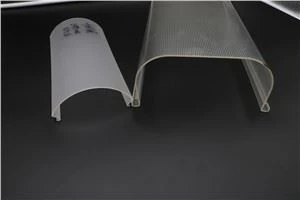
Why the PVC Extrusion Process Matters Now
You need to understand the background. The plastic extrusion industry spent decades focused on output and speed. Energy efficiency was something companies worried about later, maybe when electricity bills got too high.
That approach stopped working around 2024. Three things happened at once:
Energy costs jumped. Manufacturers started seeing melting operations alone consume 80% of their total energy use, per data from plasticsengineering.org. When you're running an extruder at 120 rpm, processing materials like PVC C with high viscosity, you're using 20% more energy than lower-viscosity alternatives like PVC B.
Regulations tightened. Europe implemented emission reduction mandates targeting 40% cuts in production emissions, according to globalgrowthinsights.com. That forced companies to either upgrade equipment or face penalties.
Raw material prices became unstable. PVC prices now fluctuate 20-25% annually based on market analysis from globalgrowthinsights.com. When your input costs swing that wildly, you need every other cost under control.
These three factors created pressure on manufacturers. The pvc extrusion process had to evolve or companies would lose money on every product they made.
Asia-Pacific dominates global PVC consumption with over 65% of the market, and China alone accounts for 45%, per globalgrowthinsights.com. That concentration means innovations happening in those regions affect pricing and technology worldwide.
The construction industry uses 55% of all PVC production globally, making it the biggest driver of demand. When construction slows, as it did in parts of Europe with demand dropping 10-15%, the ripple effects hit the entire supply chain.
The North American plastic extrusion market was valued at $28.5 billion in 2024 and will reach $43.89 billion by 2031, growing at 6.12% annually according to verifiedmarketresearch.com. That growth comes from infrastructure projects, data center expansion, and cable manufacturing.
What's Really Changing in PVC Extrusion
Energy Consumption Is the New Battleground
The pvc extrusion process uses energy in ways most people don't think about. When you feed raw PVC into an extruder, the material needs to reach specific temperatures before it can pass through the die. This melting phase accounts for approximately 80% of total energy consumption.
Research from plasticsengineering.org shows that material properties determine energy use more than you'd expect. PVC compounds with higher viscosity need significantly more power. For example, PVC I with Shore 71A hardness and no filler required just 28.8 kJ/cm³ to process. PVC C with the same hardness but higher viscosity needed 46.06 kJ/cm³, a 60% increase.
The relationship between screw speed and energy efficiency isn't straightforward. You might think running extruders faster always saves energy per unit of output. But materials with high filler content exhibit wall-slip behavior that disrupts this pattern. The optimal operating speed for the tested PVCs was around 50 rpm, where manufacturers achieve minimum specific energy consumption while maintaining melt quality.
Companies are responding by switching to twin-screw extruders. These machines provide better material mixing and increased output efficiency. The twin intermeshing screws generate intense kneading and shear, ensuring thorough dispersion of additives while using less energy per kilogram of output.
Bausano, a manufacturer highlighted on bausano.com, developed the MD Nextmover series that handles capacities up to 2,000 kg/h for PVC pipe production. Their MULTIDRIVE system reduces energy use through direct drive technology that eliminates inefficient gearboxes.
Smart Systems Are Taking Over
The pvc extrusion process now includes real-time monitoring that adjusts parameters automatically. IoT-enabled sensors track temperature, viscosity, and motor load continuously. When conditions drift from optimal settings, AI-driven controllers make instant corrections.
This closed-loop control delivers two benefits. First, energy savings of up to 35% through better motor control and heating efficiency, based on data from apenergy.com. Second, reduced downtime through predictive maintenance that catches problems before they cause shutdowns.
Induction heating is replacing traditional resistance heaters. This technology directly energizes the barrel using electromagnetic fields, reducing energy loss. According to plasticsengineering.org, induction systems heat material faster and more uniformly than conventional methods.
Waste heat recovery systems are becoming standard. Rather than venting excess thermal energy, manufacturers capture and redirect it to preheat incoming feedstock. Experimental data suggest this reclaims up to 15% of lost energy, cutting net energy input while lowering operational costs.
Modified PVC Is Opening New Markets
The development of modified PVC materials is expanding where you can use extruded products. Zhoushan Yiheng New Material Technology obtained a patent for extrusion cooling devices specifically for modified PVC production, according to maijisen-chem.com.
These modified materials solve problems that limited PVC applications. Standard PVC can become brittle in cold temperatures or degrade under UV exposure. Adding specific stabilizers, impact modifiers, and UV inhibitors changes those properties.
The construction industry wants products that last 50+ years with minimal maintenance. Modified rigid PVC delivers that longevity while resisting corrosion from chemicals and weathering. That's why unplasticized PVC now holds 35% of the global PVC pipes market, per data from coherentmarketinsights.com.
Flexible PVC formulations are growing faster than rigid varieties. The packaging industry needs materials with clarity, flexibility, and moisture resistance. Bio-based plasticizers derived from renewable resources are replacing traditional phthalates, aligning with the 25% annual growth rate in sustainable PVC production noted by globalgrowthinsights.com.

The Numbers Behind Market Shifts
The plastic extrusion machines market reached $6.9 billion in 2024 and will hit $10 billion by 2033, growing at 3.94% annually according to imarcgroup.com. PVC accounts for the majority of material types processed by these machines.
Twin-screw extruders now dominate equipment sales. These machines offer better control over material mixing and can handle recycled content more effectively than single-screw designs. Given that recycled PVC contributes 22% of total production, equipment that processes recycled material efficiently has a clear market advantage.
The polyvinyl chloride packaging film market stood at $14.06 billion in 2025 and will reach $17.48 billion by 2034, per data from towardspackaging.com. This growth comes from food packaging, pharmaceutical blister packs, and medical applications where PVC's barrier properties and thermoformability matter.
How Companies Are Optimizing Their PVC Extrusion Process
Manufacturers are making three types of changes to the pvc extrusion process:
Equipment upgrades. Companies are replacing DC motors with AC vector drives that provide better speed control and higher power factors. The shift to direct-drive systems eliminates gearbox losses, delivering 10-15% energy savings according to plasticsengineering.org.
Material optimization. Softer, less viscous PVC compounds process more efficiently. When companies reformulate their compounds to reduce viscosity while maintaining end-product properties, they cut energy costs without sacrificing quality.
Process automation. Smart energy systems using electromagnetic induction enable faster, more uniform heating. Real-time performance displays let operators manage motor power, temperature, and other parameters on the fly. This meets Smart Factory integration requirements and communicates with third-party measurement tools.
VEKA, a company with over 50 years in PVC extrusion according to veka.com, has been implementing these changes across their operations. They now produce sustainability reports every two years showing how environmental considerations drive their business decisions.
Twinscrew, a manufacturer detailed on twinscrew.net, focuses specifically on twin-screw technology. They emphasize that proper compounding and mixing during the pvc extrusion process directly impacts final product strength, color, and durability.
The challenge for smaller manufacturers is capital. New twin-screw extrusion lines represent significant investment. Retrofitting existing equipment offers a middle path, particularly converting older hydraulic systems to servo motors or adding insulation jackets to barrels.
Expert Perspectives on What's Next
Industry specialists point to three trends that will shape the pvc extrusion process through 2030:
Sustainability will drive everything. Nearly 85% of lifecycle emissions for plastic products happen at the manufacturing stage, per data from jurryextrusion.com. That puts pressure on extrusion processes to become cleaner. Expect continued growth in bio-based materials and recycling infrastructure.
Material science will advance faster. Research into polymers that melt at lower temperatures will reduce thermal energy demands. Combined with finite element modeling that optimizes screw design and die geometry, these advances could cut energy use by another 30% within five years.
Integration will become standard. The pvc extrusion process won't exist in isolation. Lines will communicate with supply chain systems, quality control sensors, and enterprise resource planning software. This integration enables just-in-time production and reduces waste from overproduction.
The development of biaxial oriented PVC (PVCO) for pressure pipes shows where innovation is heading. PVCO reduces wall thickness by half compared to standard PVC while maintaining the same pressure rating. That effectively doubles material sustainability, as noted on rollepaal.com.
Automated process controls like scanners and loss-in-weight gravimetrics let manufacturers produce closer to minimum specifications. This significantly reduces material overweight and reject rates, which are major cost drivers.
Frequently Asked Questions
How much energy does the pvc extrusion process use?
Melting operations consume approximately 80% of total energy in extrusion according to plasticsengineering.org. Total energy use varies based on material properties, screw speed, and equipment age. Modern twin-screw systems with smart energy controls can reduce consumption by up to 35% compared to older single-screw designs.
What's the difference between single-screw and twin-screw extrusion?
Single-screw extruders use one rotating screw to move material through the barrel. Twin-screw systems use two intermeshing screws that provide better mixing and degassing. Twin-screw machines handle a wider range of materials including recycled content and modified formulations. They also typically use less energy per kilogram of output.
How long does it take to see ROI on new extrusion equipment?
This depends on your current energy costs, production volume, and equipment age. Companies upgrading from 15+ year old systems to modern twin-screw lines with smart controls report energy savings of 30-35%. At typical industrial electricity rates, payback periods range from 3-5 years. Higher energy costs or government incentives for efficiency upgrades can shorten this timeline.
Can I retrofit my existing extrusion line instead of buying new equipment?
Yes, several retrofit options exist. You can convert DC motors to AC vector drives, add insulation jackets to barrels, install servo motors on hydraulic systems, or upgrade to smart temperature controllers. These modifications cost less than complete line replacement but deliver meaningful efficiency gains. Some utility companies offer programs that cover retrofit costs.
What's causing PVC prices to fluctuate so much?
Raw material costs for ethylene and chlorine have increased over 18% recently according to globalgrowthinsights.com. Supply chain disruptions and geopolitical tensions contribute to volatility. Demand shifts between regions also affect pricing. The 20-25% annual price fluctuations make cost control in other areas of production critical.
Is recycled PVC as good as virgin material?
Recycled PVC can perform similarly to virgin material when processed correctly. The challenge is that post-consumer recycled content requires specialized equipment and material handling. Modern twin-screw extruders handle recycled content better than older systems. Recycled PVC now contributes 22% of total production, showing growing industry confidence in its quality.
What materials work best for energy-efficient extrusion?
Softer, less viscous PVC compounds process more efficiently. For context, PVC I with Shore 71A hardness and no filler required just 28.8 kJ/cm³ of energy according to plasticsengineering.org. Similar hardness PVC with higher viscosity needed 46.06 kJ/cm³. Material selection significantly impacts production costs.
How do I know if my extrusion process is running efficiently?
Monitor specific energy consumption per unit volume at different screw speeds. Track the ratio of motor power to total power across your production runs. Modern systems should operate near minimum specific energy consumption, typically around 50 rpm for standard flexible PVC formulations. Higher speeds may increase wall slip and reduce melt quality.
What You Need to Do Now
The pvc extrusion process is changing faster than most manufacturers expected. Energy efficiency determines profitability in ways it didn't five years ago.
You have three options. First, evaluate your current energy consumption and identify where melting, heating, and mechanical drive are costing you money. Second, compare the economics of retrofitting existing equipment versus investing in new twin-screw systems. Third, look at your material formulations and whether less viscous compounds would maintain product quality while cutting costs.
The market is growing. North American plastic extrusion will reach $43.89 billion by 2031. But growth alone won't protect margins if your costs per meter exceed what competitors achieve with modern equipment and processes.
Companies that optimize the pvc extrusion process now will have lower costs and better positioning when the next wave of environmental regulations arrives. Those waiting for costs to stabilize will find themselves permanently behind more efficient competitors.