

You've probably used half a dozen extruded plastic products today without ever realizing it. The trim on your car door, the irrigation pipe running under someone's lawn, even the cling film wrapped around your groceries-most of them started as a hot stream of polymer being pushed through a die.
People sometimes imagine plastic extrusion as a sterile, fully automated "lights-out" process. It isn't. Stand near an extrusion line for ten minutes and you'll notice the hum of the drive motor, the occasional hiss from the cooling tank, and operators adjusting settings that look minor but absolutely matter. Extrusion is simple in principle, but the devil-and most of the disasters-is in the details.
How the Whole Thing Actually Works
From Pellets to Melt
The raw material usually comes in pellets-small, glassy beads that don't look like much. Once they drop into the hopper and slide into the heated barrel, everything changes quickly. Inside that barrel is a rotating screw (industry people simply call it "the screw"), which is basically the heart of the entire extrusion process.
The screw doesn't just push material forward; it compresses, melts, mixes, and stabilizes the polymer. The geometry-pitch, flight depth, compression ratio-plays a surprisingly big role in melt quality. You can run the same material on two screws and get completely different surface finishes or throughput rates. I've seen operators swear by one screw design while complaining that another "runs angry," which is their casual way of saying the melt pressure fluctuates too much.
Pressure, Flow, and the Die
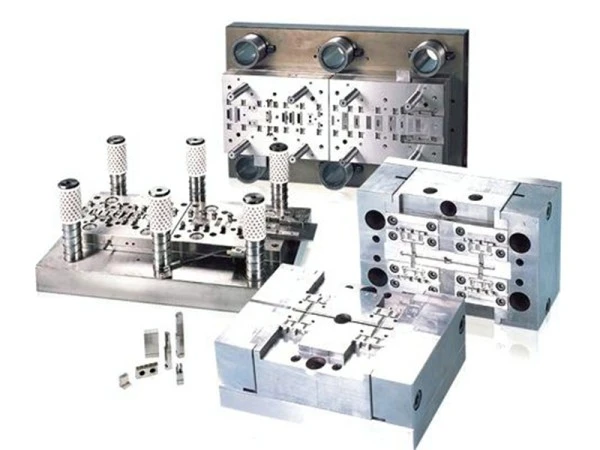
As the molten polymer approaches the end of the barrel, pressure builds. Then everything comes down to the extrusion die-the shaped opening that gives the product its profile. A die may look simple from the outside, but open one up and the internal flow channels can resemble something between a labyrinth and a hydraulic sculpture.
The polymer exits the die in a continuous shape, still soft and very temperature-sensitive. Cooling must be fast enough to lock the profile in, but controlled enough to avoid internal stresses. The temperature windows aren't generous. Too hot and the polymer degrades; too cold and the flow becomes inconsistent.
Why Temperature Control Never Stops
Most modern extrusion lines use multiple heating zones-sometimes six, sometimes twelve-each carefully tuned to the polymer's behavior. Changing material from HDPE to PVC? Plan on retuning everything. PVC, for example, punishes even slight overheating by releasing hydrogen chloride gas, which is as nasty for operators as it is for equipment.
Why Plastic Extrusion Became a Manufacturing Workhorse
Extrusion took over large segments of plastics manufacturing for one simple reason: once you dial in a line, you can run miles of consistent product with almost no interruption. Nearly every thermoplastic-polyethylene, polypropylene, PVC, ABS, polystyrene-can be extruded as long as it melts and flows.
The leap forward came when extrusion dies became capable of forming complex cross-sections. Suddenly, manufacturers weren't limited to rods and flat sheets. Window frames, cable conduits, multi-channel profiles, co-extruded products-all became possible with refinements in die design and melt distribution.
Pipe and Tube Production

Hollow Without Drilling: The Mandrel Solution
Producing hollow shapes like pipes required engineers to rethink the die itself. Enter the mandrel-a central pin that forces polymer to flow around it. This innovation made continuous pipe extrusion possible.
Large-diameter pipe lines are impressive machines. The die alone can be wider than a dinner table, and supporting the newly extruded pipe without deforming it is a challenge in its own right.
Vacuum Sizing Tanks
To maintain a perfect circular profile, manufacturers rely on vacuum sizing tanks. The hot pipe enters a water-filled chamber containing a precision sizing sleeve. Vacuum draws the pipe outward to match the sleeve's shape while it cools. It's a clever system that keeps large pipes round instead of oval.
Blown Film-More Complicated Than It Looks
If you've never seen a blown film extrusion line, picture a huge glowing bubble rising straight out of a machine. It looks vaguely dangerous the first time, but it's the standard method for producing plastic bags and flexible packaging film.
The Bubble
A vertical die extrudes a molten tube upward. Air inflates the tube into a bubble, which is continuously cooled by air rings. The bubble stretches until it reaches the desired width, and nip rollers at the top collapse it into a double-layer film that gets wound onto rolls.
Why Control Is Everything
The bubble is constantly negotiating gravity, air pressure, cooling airflow, and line speed. Too much air and the bubble balloons beyond spec-or bursts. Too little and the film wrinkles. Automation helps, but experienced operators still know when something "feels off" long before sensors catch it.
Film properties depend heavily on the blow-up ratio-how much the bubble expands compared to the die diameter. Grocery bags, agricultural film, packaging film-they all require different ratios and therefore different mechanical characteristics.
Cast Film-A Straighter Path to Precision
Not all film is blown. Cast film extrusion skips the bubble entirely. A flat die extrudes a sheet that lands on chilled rollers, which set the film's thickness, clarity, and surface finish.
Cast film lines generally achieve far tighter gauge control than blown film. They also run faster. That's why food packaging-where uniformity matters more than multi-directional strength-leans heavily toward cast film. The trade-off? Cast film is less mechanically balanced across directions.
Coating and Over-Extrusion Applications
Extrusion really shows its versatility when used for coating. Electrical wire, fiber cable, and communication lines all rely on over-extrusion to form insulation and jacketing.
Pressure vs. Tubing Dies
Two die types dominate:
Pressure dies bond the polymer tightly around the conductor-essential for insulation.
Tubing dies leave a slight gap, suitable for protective jackets where adhesion isn't required.
Wire coating lines can run at more than 2,000 feet per minute. At those speeds, tiny variations in melt temperature or die geometry show up instantly as surface defects, so online laser or X-ray gauges constantly monitor wall thickness.
Details That Actually Matter

Material Choice
Each polymer has its own personality.
HDPE: wide processing window, forgiving, used everywhere.
LDPE: flows easily, great for film.
PVC: stable when controlled, troublesome when overheated.
ABS: sensitive to shear and temperature.
A screw that performs beautifully with polypropylene may produce inconsistent melt with PVC.
Die Design
Modern dies use simulation software, but there's still a lot of hands-on refinement. Melt must reach every part of the die at the same time. If not, the profile will warp or dimensionally drift.
Cooling Methods
Different products need different cooling:
Air cooling for light profiles
Water baths for medium-weight extrusions
Vacuum sizing for pipe
Specialty cooling (mist, chilled rollers, even cryogenic bath methods) for unusual polymers
Cooling strategy influences dimensional stability more than many new engineers expect.
Where Extrusion Still Has Limits
Extrusion is superb for continuous, constant cross-section products. But it can't easily handle:
variable geometries along the length
complex 3D shapes
extremely thick sections that cool unevenly
And every time a line changes dies or materials, expect some startup scrap. High-mix, low-volume production doesn't always make financial sense on an extrusion line.
Even with all its quirks and constraints, plastic extrusion remains one of the most cost-effective ways to turn raw polymer into usable products. Look around-pipes, profiles, films, trims, insulation, packaging. Extrusion runs quietly in the background, shaping more of the modern world than most people realize.
FAQ About Plastic Extrusion
1. What products are most commonly made through plastic extrusion?
A surprisingly wide range. Anything with a continuous cross-section is a candidate-PVC pipes, polyethylene tubing, window frames, weatherstripping, cable insulation, sheet film, packaging film, drip irrigation lines, and even some automotive trim components. If it's long, repetitive, and uniform, extrusion is usually the most economical way to produce it.
2. What makes the extrusion screw so important?
The screw determines how the polymer melts, mixes, and pressurizes. A slightly different compression ratio or channel depth can completely change melt stability. Many operators develop "favorites" because certain screw geometries deliver smoother flow or fewer pressure spikes with specific materials.
3. Why do dies for extrusion look so complicated inside?
Because polymer melt doesn't naturally distribute uniformly. The internal flow channels inside a die are engineered to deliver equal pressure and flow to every section of the profile. For complex shapes-like multi-chamber window frames-the internal die structure can be surprisingly intricate.