

We hold wall thickness to ±8% on production runs above 5,000 feet. The industry standard in ASTM A-513 Section 11.2 allows ±10%, but we learned early that anything above 8% causes downstream problems in stamping and welding, and warranty claims taught us that lesson the expensive way.
This article covers the specs, cost structure, and custom options for square PVC tubing from our perspective as a manufacturer shipping 200+ tons of extruded profiles annually. If you're comparing suppliers, the details below will help you ask sharper questions, and we'll show exactly how we answer them.
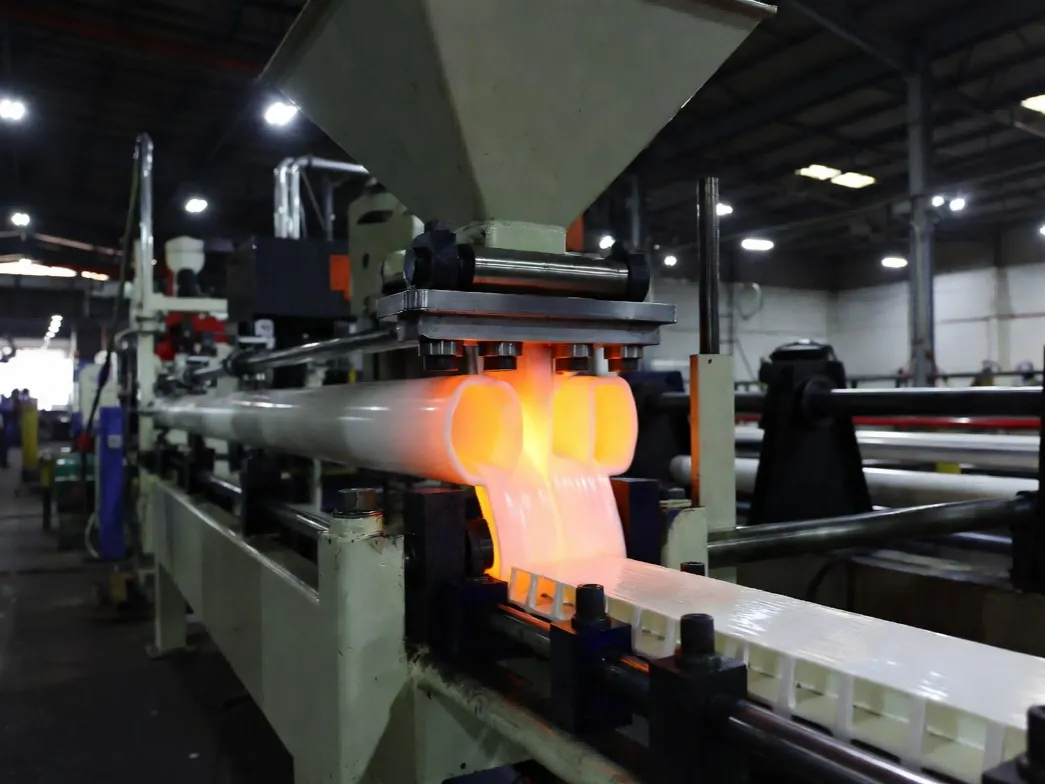
Dimensional Range and Material Grades
Standard square PVC tubing spans from 11mm × 6mm up to 50mm × 25mm in catalog sizes, with wall thicknesses between 0.6mm and 3mm. But catalog specs only tell half the story. Corner radii and tolerance measurement points vary by supplier, and those variations change how the profile fits into your assembly.
Our extrusion capability extends to 18 inches wide and 40 feet long in continuous runs. For most B2B applications, the practical constraint isn't size; it's consistency across a multi-thousand-foot order. We measure wall thickness at both flat-face centers and corner transitions, then reject any section that drifts beyond spec. Not every extruder does this. Ask your shortlisted suppliers where they measure.
Material grade determines application fit. Rigid PVC (Type I) delivers tensile strength around 7,200 psi and flexural strength near 11,000 psi, adequate for structural framing under moderate loads, cable protection, and display fixtures. Flexible PVC compounds trade some strength for UV resistance and impact absorption, which shifts the use case toward outdoor and high-movement environments.

Cost Structure: Where the Real Savings Show Up
Square PVC tubing runs $0.25 to $1.20 per linear foot depending on size and wall thickness. Steel equivalents cost $1.50 to $3.00; aluminum lands between. That's a 30-50% material cost advantage, but the number changes fast once you factor in three variables most quotes don't break out.
Installation labor drops significantly with PVC. No welding, no corrosion coating, no specialized cutting tools. Last quarter we completed a 6,000-foot cable tray system for a logistics warehouse in Guangdong. The client's original spec called for galvanized steel, but their design institute had flagged a tight installation window. We spent two weeks confirming that PVC met the fire classification for their specific corridor layout, then proceeded. Final installation took 40% less time than the steel baseline, and the labor savings alone offset the material premium they initially worried about.
Maintenance over a 10-year lifecycle is effectively zero for PVC in non-UV-exposed environments. Steel requires periodic inspection and refinishing; aluminum needs anodizing or powder coating to prevent oxidation in humid conditions.
PVC is the wrong answer in three situations: sustained temperatures above 140°F, load-bearing applications under continuous stress, or fire resistance ratings (UL94-V0) required at the tube level rather than the enclosure level. Last month a bakery equipment manufacturer came to us with a 160°F continuous-operation environment. We referred them to three CPVC suppliers we trust and moved on. That kind of project would fail in the field, and we'd rather lose the quote than own the failure.
Our Order Book Tells the Story
About two-thirds of our square PVC tubing volume ships to display, retail fixture, and POP signage manufacturers. That concentration developed over a decade because this segment's requirements align with what we've optimized: tight color consistency (ΔE < 1.5 across batches), no visible sink marks, and cut-to-length accuracy within ±1mm. Our die library and QC checkpoints were built around these specs.
Electrical and cable management applications account for most of the rest. Square profiles route cleaner around corners than round conduit, but PVC requires a separate grounding conductor in most code jurisdictions. If your spec calls for conduit that doubles as equipment ground, you need metal. We'll tell you that upfront rather than quote something that won't pass inspection.
Greenhouse and agricultural structures push PVC into UV-exposed territory. Standard rigid PVC chalks and becomes brittle within 2-3 outdoor seasons. We stock UV-stabilized formulations with titanium dioxide additives rated for 5+ years of direct sun exposure, but they cost 15-20% more than standard grades. If your quote from another supplier looks suspiciously low on an outdoor project, ask what UV package is included.

Custom Extrusion: Timeline, Tooling, and Minimums
New die tooling takes 7-10 working days to manufacture; first samples ship around day 15. That timeline assumes a straightforward cross-section. Co-extruded profiles with dual colors or dual durometers add another week.
Tooling costs range from $1,500 for simple modifications to existing dies up to $8,000 for complex new profiles with tight tolerances. We amortize tooling into the per-foot price on orders above 5,000 feet, which means the upfront investment disappears for volume buyers. Below 1,000 feet, setup costs dominate the quote and you may find custom profiles priced higher than buying standard stock and modifying it yourself. We'll tell you when that's the case.
Before quoting custom work, we confirm five things: Is the profile exposed to UV? Do you need wall thickness certified at corners or only at flat faces? Will you cut the profiles yourself or need cut-to-length? Does your assembly use solvent welding, mechanical fasteners, or both? What's your annual volume projection? These questions aren't screening. They're how we avoid quoting a product that doesn't fit your actual application.
Next Step
If you have a drawing or a target spec, submit it through our inquiry form. We respond within 48 hours with a detailed quote that includes: per-foot pricing at your expected volume, tooling cost if custom, lead time to first shipment, and a recommendation on material grade based on your application environment.
For projects still in the design phase, we offer a 30-minute technical consultation at no cost. Most procurement teams find this useful for narrowing down size, wall thickness, and UV requirements before going out for competitive bids.
FAQ
Q: What wall thickness tolerance should I expect?
A: Industry standard is ±10% measured at flat-face centers (ASTM A-513, Section 11.2). We hold ±8% on runs above 5,000 feet and measure at both flat faces and corner transitions. Submit your spec for a tolerance guarantee on your specific order.
Q: Can square PVC tubing be used outdoors?
A: Only with UV-stabilized formulations. Standard rigid PVC degrades within 2-3 seasons of direct sun. We stock UV-stabilized grades rated for 5+ years. Ask for the UV package when you request a quote.
Q: What's the lead time for custom profiles?
A: Die tooling: 7-10 days. First samples: day 15. Production orders: 3-7 days after sample approval. Co-extrusion adds one week. Contact us with your timeline and we'll confirm feasibility before you commit.
Q: How does square PVC compare to aluminum on total installed cost?
A: PVC material costs 30-50% less; installation labor is typically 30-40% lower due to no welding or coating. Aluminum may win on projects requiring unsupported spans over 4 feet with single-point loads above 15kg. If your spec falls into that range, we'll flag it during quoting so you can make an informed material decision.