

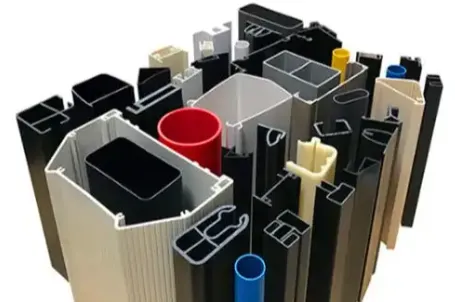
Custom plastic profiles have fundamentally altered how manufacturers approach component design across industries ranging from construction to automotive. Through thermoplastic extrusion-a process whereby polymer resins are heated, forced through precision-engineered dies, and cooled into continuous cross-sectional shapes-engineers now access geometry and material properties that standard stock shapes simply cannot deliver. The commercial implications extend beyond mere substitution of metal or wood; we're talking about rethinking product architecture from the ground up.
The Cost Equation (It's Complicated)
Here's what most procurement managers miss when they first look at custom extrusion quotes: the upfront tooling cost feels expensive. A custom die might run anywhere from $1,500 to $8,000 depending on complexity. That number alone scares people off.
But run the math differently.
Once that die exists, your per-unit cost drops dramatically compared to machining, injection molding, or-god forbid-hand fabrication. I've seen projects where the break-even point hit around 500 linear feet. After that? Pure margin improvement. The extrusion process churns out consistent profiles at speeds that make other manufacturing methods look almost artisanal by comparison.
What nobody tells you: the real savings emerge over years, not months. PVC window frames don't rot. They don't need repainting every three years. HDPE drainage channels won't corrode underground. Your maintenance budget thanks you later.
Material Selection Goes Deep
PVC dominates the conversation, sure. Rigid PVC handles structural loads, resists moisture intrusion, stands up to UV exposure when properly stabilized. It's the workhorse.
But the material palette available to designers has expanded considerably:
Polyethylene brings chemical resistance that PVC can't match in certain applications-think laboratory environments or food processing where specific reagent compatibility matters. ABS offers impact strength that makes it irreplaceable in consumer products and automotive trim. Polypropylene handles repeated flexing without fatigue failure, which explains its prevalence in living hinges and similar applications.
The real magic happens with additives. Flame retardants for electrical conduit. Antimicrobial compounds for healthcare settings. UV stabilizers rated for 20+ years of outdoor exposure. Glass fiber reinforcement pushing tensile strength into territories that compete with aluminum.
Co-extrusion deserves its own mention. Running two materials through the same die-say, a rigid structural core with a flexible sealing lip-eliminates assembly steps entirely. One part. Two material properties. That's elegant engineering.
Precision That Actually Matters
Tolerances of ±0.005" are achievable on well-run extrusion lines. For context, that's tighter than most woodworking operations can dream of maintaining.
Why does this matter practically? Sealing applications, mostly. A weatherstrip that's dimensionally inconsistent creates air gaps. Those gaps become energy losses, water infiltration points, noise transmission paths. The building envelope fails not catastrophically but insidiously-gradually underperforming in ways that occupants feel but can't always identify.
Consistency across production runs matters equally. Part number 10,000 should match part number 1 within specification. Extrusion delivers this repeatability almost boringly well.
Weight Reduction (The Automotive Obsession)
Every gram counts when you're chasing fuel economy standards. OEMs obsess over mass reduction because physics doesn't negotiate-moving weight requires energy, period.
Plastic profiles weigh roughly one-seventh what equivalent steel sections weigh. Aluminum closes that gap somewhat, but plastics still win on density while offering comparable stiffness when designed properly. Hollow profiles, internal ribbing, strategic wall thickness variation-these design freedoms let engineers optimize strength-to-weight ratios in ways solid materials simply prohibit.
The handling benefits cascade through the supply chain. Lighter components mean lower shipping costs. Installers work faster when they're not muscling heavy parts into position. Injury rates drop. These secondary effects rarely appear in initial cost analyses but they're real.
Design Freedom-Where Things Get Interesting
Stock shapes force compromises. Your design must adapt to what's available: standard angles, channels, tubes, rods. Fine for prototyping. Frustrating for optimized products.
Custom dies liberate geometry. Undercuts. Internal channels for wiring. Snap-fit features eliminating fasteners. Integrated mounting provisions. Co-extruded soft-touch surfaces bonded permanently to structural substrates.
I've watched engineers discover they can consolidate three-part assemblies into single extrusions. The reduction in SKUs alone justifies the tooling investment sometimes. Fewer parts means fewer suppliers, simpler inventory, reduced assembly labor, fewer potential failure points.
The aesthetic possibilities shouldn't be overlooked either. Surface textures from glossy to matte to woodgrain simulation. Color matching to corporate standards without painting. Transparent sections where visual inspection matters.
Durability That Outlasts Expectations
Rot, rust, corrosion-these failure modes simply don't apply to most plastic profiles. That's not marketing; it's material science.
Moisture absorption in properly formulated PVC runs under 0.1%. Compare that to wood, which swells and contracts seasonally, eventually cracking paint and loosening joints. Metal alternatives demand protective coatings that degrade over time, requiring maintenance cycles that many facility managers underbudget.
Chemical resistance varies by polymer family, so specification requires care. But appropriately selected plastics handle exposure to oils, solvents, mild acids, alkalis, and cleaning chemicals that would attack conventional materials aggressively.
The marine and pool industries figured this out decades ago. Saltwater environments destroy steel and even aluminum eventually. HDPE and PVC keep performing.
Environmental Considerations
Waste reduction during manufacturing runs surprisingly low. The extrusion process itself generates minimal scrap-mostly startup purge material and occasional off-spec production, almost all of which gets reground and fed back into the process. Closed-loop recycling at the production stage approaches 95% efficiency on well-managed lines.
End-of-life recyclability remains polymer-dependent. PVC recycling infrastructure exists but isn't universally accessible. Polyethylene and polypropylene fare better in most municipal systems.
The lighter weight argument reemerges here too. Less mass moved through supply chains means lower transportation emissions. Building components that eliminate painting reduce VOC releases. Longer service life delays replacement manufacturing entirely.
Sourcing custom plastic profiles requires finding extruders who understand your application, not just the extrusion process generically. Tooling lead times typically run 4-8 weeks. Minimum order quantities vary wildly-some shops accommodate prototype quantities of 100 feet while others require commitments measured in miles.
Material selection, die design, downstream processing, quality protocols-there's genuine expertise involved in getting this right. The technology has matured past the point where it's exotic, but specifying it well still demands attention to details that procurement software can't automate.
The seven benefits above represent starting points for evaluation, not endpoints. Your specific application will emphasize some factors heavily while rendering others nearly irrelevant. That's fine. That's how engineering decisions should work.