

Industry News | December 2025
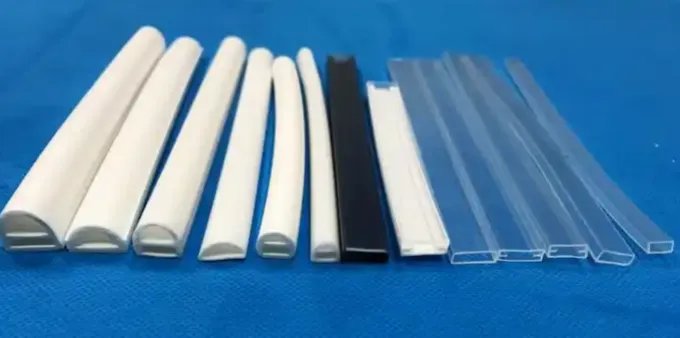
Something's happening in the lighting world that most people outside the industry haven't noticed yet. Walk into any high-end kitchen renovation, peek behind the cove lighting in boutique hotels, or look closely at retail displays-chances are you're seeing the glow of LED strips filtered through precision-engineered diffusers. And the market for these unassuming plastic covers? It's on fire.
The numbers tell a story that caught even veteran analysts off guard. QYResearch's latest figures put the global LED light diffuser strip cover market at $242 million for 2025, with projections showing a compound annual growth rate of 10.5% through 2033. That's not smartphone money, sure. But for what amounts to fancy plastic tubing? It's remarkable.
Why Guangdong Province Matters More Than You Think
One fact rarely mentioned at the trade show regarding LED diffusers is that they are almost all produced in the same place. Guangdong Province in China has quietly become the world's diffuser manufacturing hub, home to many excellent manufacturers. These names may not appear in glamorous design magazines, but their presence allows your architect to specify "seamless linear lighting" without exceeding the budget.
This concentration is almost unbelievable.
The Asia-Pacific region also dominates consumption-accounting for about 40% of global demand-with Europe close behind at 30%. And North America? Frankly, we're still catching up. The residential renovation boom has certainly helped, but European architects began specifying integrated LED strips nearly a decade ago, while American contractors are still debating whether recessed downlights are outdated.
The UGR Problem (And Why Designers Are Obsessed With It)
Ask any commercial lighting designer about their biggest headache and you'll hear three letters: UGR. Unified Glare Rating. It's a measurement of visual discomfort that European standards bodies have been tightening for years, and it's reshaping the entire diffuser market.
LEDSON's announcement this May was telling. Their new prismatic diffusers meeting UGR<19 standards flew off shelves almost immediately. The honeycomb pattern when lit looks genuinely beautiful-I've seen installations where visitors assumed the lighting was custom-fabricated, not pulled from a catalogue. That's the promise of good diffusion: invisible complexity.
The technical jump matters.
Older diffusers scattered light, sure, but they sacrificed transmission efficiency. The new generation-using PMMA and polycarbonate compounds that would've been exotic five years ago-manages 85-95% light transmission while still eliminating hotspots. It sounds incremental. It's not. That efficiency gap is the difference between adequate lighting and a €50,000 electricity bill over a building's lifetime.
The Black-on-Black Trend Nobody Predicted
Speaking of LEDSON-and I keep coming back to them because they're genuinely innovating, not just iterating-their "Black on Black" series launch caught the industry flat-footed. Black aluminum profiles with black diffusers. Sounds obvious in retrospect. Interior designers had been spray-painting silver profiles for years to match dark ceilings and furniture. Now it's standard catalogue.
The aesthetic shift reflects something deeper about how we think about lighting. The old model treated illumination as purely functional-hide the source, maximize output. The new approach treats the fixture itself as a design element. Even when it's invisible, it has to be
intentionally invisible.
Silicone Changes Everything (Quietly)
The real technical story of 2025 isn't prismatic diffusers or glare ratings. It's silicone.
SuperLightingLED's anti-break neon tubes represent a genuinely clever engineering solution to a problem that's plagued installers for years. LED strips mounted in rigid aluminum channels crack under thermal stress. Bend them around curves and the PCB fractures. Their new design embeds a plastic reinforcement strip at the contact point-sounds simple, but the pressure distribution during bending drops dramatically. Installation time halves. Warranty claims plummet.
Food-grade silicone diffusers are becoming standard for premium applications. No yellowing. No off-gassing. IP67 waterproof ratings that actually hold up. The neon-flex aesthetic that was prohibitively expensive three years ago is now achievable on mid-range residential budgets.
The Tariff Cloud
Can't write about lighting components in 2025 without addressing the elephant: U.S. tariff policy. The latest QYResearch reports include explicit sections on supply chain restructuring, and for good reason. With most production concentrated in China, American importers face genuine uncertainty.
Some manufacturers are hedging-Vietnamese and Turkish suppliers have emerged offering silicone diffusers under $0.50 per meter, though compliance documentation remains spotty. Others are betting that the quality gap protects Chinese producers. High-end architectural projects won't risk visible seams or inconsistent light transmission to save 15% on materials.
The smart money seems to be on diversification without abandonment. Zhongshan manufacturers are adding CE/ROHS certifications explicitly to simplify EU imports if American markets become too complicated.
What Actually Matters for Buyers
Lost in the market analysis is practical guidance. So here's what specifiers and contractors actually need to know:
Light transmission ratings are marketing unless you see LM-80 test reports. Period. The difference between 85% and 92% transmission sounds marginal until you're troubleshooting why a 3000K strip looks dingy amber behind a cheap diffuser.
Inner channel width compatibility trips up more installations than any other factor. A 10mm strip in an 8mm channel isn't "close enough." Thermal expansion will remind you of that mistake within six months.
SDCM ≤3 for color consistency. If your supplier doesn't know what that means, find a different supplier.
The Bigger Picture
TrendForce estimates the global LED lighting market will hit $566 billion by year-end. Diffusers are a rounding error in that figure, but they're the component that makes "seamless" lighting possible. Without good diffusion, you don't have architectural lighting-you have visible LED dots. Nobody's paying premium prices for visible dots.
The broader LED strip market itself is surging-14.5% CAGR through 2031, pushing toward $38 billion. Every dollar of that growth requires diffusion solutions. The ratio isn't one-to-one, but it's not far off.
Smart home integration is accelerating demand in ways that weren't predictable even two years ago. IoT-enabled strips need diffusers that accommodate thicker PCBs, integrated sensors, and wireless modules. The product category is fragmenting into specialty applications faster than catalogues can be printed.
Where This Goes
Predictions are dangerous, but a few trends seem durable.
Sustainability certifications will matter more. The EU's Ecodesign Directive is tightening, and products without clear recyclability paths will face procurement barriers in government and institutional projects. Biodegradable diffuser materials exist in labs-commercial viability is probably 3-5 years out, but it's coming.
Human-centric lighting (HCL) requirements will push manufacturers toward diffusers optimized for tunable white and full-spectrum sources. The diffusion characteristics for 2700K warm white differ meaningfully from 6500K daylight. Single-solution products will give way to application-specific lines.
And the Guangdong concentration? It'll persist. Manufacturing ecosystems don't relocate quickly, and the region's tooling expertise represents decades of accumulated knowledge. Alternative supply chains will develop-they have to, for risk management-but expecting Vietnamese or Mexican production to match Chinese quality and price simultaneously within five years is probably optimistic.
For now, the humble diffuser keeps gaining market momentum. Not because it's glamorous-because it's essential. Sometimes the most important components are the ones you're not supposed to notice at all.
-
Sources include QYResearch market reports, TrendForce LED lighting analysis, manufacturer announcements from LEDSON and SuperLightingLED, and industry trade publications. Market figures are projections subject to revision.