


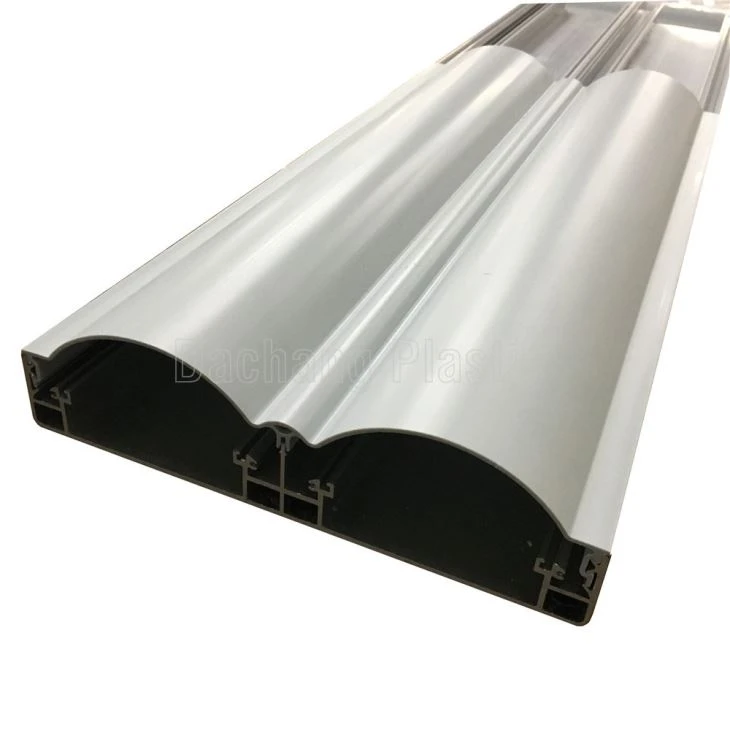
Big Radome Plastic Profile - Full Specifications
| Material | UV-grade ASA · ABS · UPVC |
|---|---|
| Standard section size | 330 × 220 mm |
| Max extruded section | Project-specific; confirm against the approved drawing |
| Color | Gray · White (custom on request) |
| Frequency range | Project-specific within the published 0.9–5.0 GHz range |
| Reference antenna configuration | Recorded as part of the RF test setup; antenna gain is not an intrinsic radome specification |
| RF acceptance | Insertion loss and VSWR / return-loss criteria agreed for the required band |
| Profile shapes | U-shape · Square · W-shape · custom |
| Extrusion method | Single / Co / Tri-extrusion |
| Secondary processing | Drilling · Punching · Angle cut · Assembly |
| Application | Base-station antenna enclosure |

// Standard 330 × 220 mm extruded radome profile
330 × 220 mm Standard Radome · UV-Grade ASA / ABS / UPVC · In-House Tooling · Samples & Pilot Runs · ~30-Day Established-Profile Container Lead Time
RF Acceptance Data for Custom Thermoplastic Radome Housings
A custom radome should be qualified on the final material grade, wall construction and operating band - not by material name alone. For project RF approval, define the antenna baseline and acceptance criteria before the extrusion die is released for volume production.
| Procurement Parameter | Project Requirement |
|---|---|
| Standard radome section | 330 × 220 mm |
| Standard materials | UV-grade ASA · ABS · UPVC |
| Operating band | Project-specific within the published 0.9–5.0 GHz range |
| Exact RF channel | Confirm before sample approval |
| Frequencies above 5.0 GHz | Engineering and RF test scope must be confirmed before tooling |
| Wall thickness & dimensional tolerance | Defined on the approved project drawing |
| RF acceptance | Compare the finished radome with the uncovered-antenna baseline |
| RF data | Insertion loss and VSWR / return-loss criteria agreed for the required band |
| Resin identification | Exact material grade confirmed with the project specification |
| Secondary processing | Drilling · punching · angle cutting · cut-to-length · assembly |
Best fit: long sector, panel and base-station antenna housings with a constant cross-section.
Process boundary: spherical, deep-draw or compound-curvature radomes should be evaluated for thermoforming, molding or another manufacturing process rather than forced into an extrusion design.
View our custom large-section plastic extrusion capability
Send Your Drawing + RF Band for Feasibility Review
Include the cross-section, exact operating frequency, target length and expected order volume. We will confirm extrusion feasibility, RF validation scope and the quotation path.
Extruded Radome Plastic Profile - Engineered for Base-Station RF Performance
A radome plastic profile - also called an antenna radome, radome cover or RF-transparent antenna enclosure - is the weatherproof shell that lets a base-station antenna keep transmitting while wind, UV and water stay outside. This big-section profile is extruded as one continuous cover, not molded in segments, so a single length spans a full sector or panel antenna with fewer field-assembled joints and potential ingress interfaces.
RF performance depends on the final resin grade, wall geometry and exact operating band. For projects within the published 0.9–5.0 GHz range, the finished cover should be compared with the uncovered-antenna baseline using agreed insertion-loss and VSWR or return-loss criteria before volume production. UV-grade ASA, ABS and UPVC are available for project-specific material selection.
Because the cross-section is constant, one extrusion die can serve multiple approved cut lengths - arrays that change length from site to site can reuse the same cross-section tooling. It is the difference between buying a continuous antenna housing and managing a catalog of molded shells.
Large-Section Antenna Radome Cover - Key Buyer Advantages
Three reasons the large-section extruded radome profile changes the procurement math on a multi-site rollout.
Signal stays in the link budget
Wall thickness, wall geometry and resin grade are selected for the required band. The qualification sample is then tested against the uncovered-antenna baseline using the agreed insertion-loss and VSWR or return-loss limits.
For buyers: qualify the final radome against the uncovered-antenna baseline before production, so RF impact is measured on the actual resin, wall geometry and operating band rather than assumed.
One shell, not a bolted assembly
A continuous large-section profile reduces the number of assembly joints. Wind load, seismic, ingress, lightning-protection and mounting requirements remain project-specific and should be defined in the approved antenna and installation design.
For buyers: a continuous profile reduces assembly joints and potential ingress interfaces; final sealing performance depends on the end-cap, mounting interface and installation design.
Rated for outdoor base-station duty
UV-grade ASA, ABS and UPVC offer different balances of outdoor weatherability, impact performance and cost. The exact compound and any required UV, thermal, chemical or salt-spray test should be confirmed for the installation environment.
For buyers: specify the site environment and required weathering evidence during quotation so material selection is tied to an agreed test method and acceptance result.
UV-Grade Radome Plastic Profile - Material & Extrusion
Material choice affects the radome's RF performance, weatherability and cost, so the resin should be selected for the exact band and site environment rather than from a single default. UV-stabilized ASA (acrylonitrile styrene acrylate), ABS and UPVC offer different balances of outdoor weatherability, impact performance and price, while profile extrusion can run single, co- or tri-layer structures when the approved project specification requires them.
A constant cross-section is what makes the large format efficient: one approved die can produce multiple cut lengths without a separate mold for each length. Non-standard sections and materials require engineering review, dimensional approval and RF qualification before volume production.
| ASA · UV | Weatherable option for high-UV exposure; confirm the exact grade and required weathering test. |
| UPVC | Cost-focused rigid option; RF and outdoor suitability depend on the selected compound and test scope. |
| UV-ABS | Impact-focused option; outdoor performance depends on the UV-stabilized grade specified. |
| PC / PP-GF | Project-specific option requiring confirmation of mechanical, RF and processing requirements. |
Antenna Radome Cover Applications - Telecom, 5G & Infrastructure
Base-station antenna enclosures
Continuous covers for sector, panel and MIMO antennas on macro cells and small cells - one extruded length per face instead of a stack of molded shells.
Meteorological & radar covers
Weatherproof, RF-transparent housings for ground weather-radar and meteorology antennas under long-term outdoor and coastal exposure.
Macro & 5G tower arrays
Large-section profiles sized to multi-band, broadband 5G NR sub-6 arrays for mobile network operators, where a consistent RF window across the whole array matters most.
Aerospace & ground stations
Antenna shells for satcom ground-station and aerospace links where signal integrity and weather sealing are both mission-critical.
Across these applications, extrusion is best suited to long housings with a constant cross-section. The exact frequency, channel, material and RF acceptance criteria must be confirmed for each cellular, microwave, Wi-Fi / WLAN or other antenna project; the published project range should not be treated as automatic qualification for every channel or system.
Custom Big Radome Plastic Profile - OEM Manufacturing for Project Buyers
Send the antenna envelope, cross-section drawing, exact operating band and RF acceptance target - or a physical sample for review. Custom radome extrusion from your samples or drawings is available for private-label OEM antenna covers and project-specific development.
In-house tooling means a new cross-section is cut on our own line rather than subcontracted, so a first sample moves on the timeframe a project schedule needs. Eleven base resins are held in stock for single, co- and tri-extrusion, and secondary work is done before the profile ships - so what arrives on site bolts up without a second vendor.
| SECTION | Custom cross-section & cut length; maximum capability confirmed against the drawing |
| MATERIAL | ASA · ABS · UPVC · PC · PMMA · PP · PE · PS · POM · PA · PET |
| STRUCTURE | Single / co / tri-layer - weatherable skin over structural core |
| COLOR | Gray, white or matched to spec |
| RF ACCEPTANCE | Final resin and wall geometry compared with the uncovered-antenna baseline |
| FINISHING | Drilling · punching · angle cutting · cut-to-length · assembly |
When Is an Extruded Radome the Right Manufacturing Process?
| Radome Geometry / Project Need | Process Fit |
|---|---|
| Long housing with a constant cross-section | Strong fit for extrusion - one die can serve multiple approved cut lengths |
| U, square or W-shaped sector / panel antenna enclosure | Strong fit for extrusion |
| Repeat OEM program using the same cross-section in different lengths | Strong fit for extrusion |
| Spherical or dome-shaped enclosure | Not a natural extrusion geometry |
| Deep-draw or compound-curvature housing | Evaluate thermoforming or molding instead |
| Project with no defined RF band or acceptance criteria | Prototype and RF qualification should precede volume production |
This process boundary helps buyers select extrusion for the geometry it handles efficiently instead of forcing every radome design into the same manufacturing route.
Compliance & Quality Documentation for Radome Profiles
Compliance documentation is matched to the exact material grade, destination market and finished-equipment requirement. A standalone plastic radome extrusion is not automatically a CE-marked product; CE applicability depends on the legislation that applies to the finished equipment.
For procurement qualification, request the document that corresponds to the actual resin and production lot rather than relying on a generic certification logo.
| Documentation | What Should Be Identified |
|---|---|
| RoHS material compliance | Applicable declaration or test report for the specified resin / compound |
| REACH | Current SVHC declaration or report applicable to the material supplied |
| ISO 9001 quality system | Current certificate number and the edition to which the factory is actually certified |
| Third-party testing | SGS or other laboratory report number, date and test scope where applicable |
| UV weathering | Test method, exposure condition and result for the specified outdoor resin where required |
| RF qualification | Operating band, final wall construction, test condition and agreed RF acceptance data |
| Material identification | Resin grade / compound linked to the approved project specification |
Documentation availability and test scope should be confirmed during quotation so the buyer knows which reports will be supplied before issuing the purchase order.
Packaging & Shipping
Packaging & Bulk Shipping
Built for wholesale, project-quantity orders: each length ships in heavy-gauge PE-bag protection to stop transit abrasion on the weather skin, with carton or wooden-case packing available where the destination or freight mode calls for it.
- Container lead time ≈ 30 days from confirmed order
- PE bag · carton · export wooden case
Order Terms
Custom Radome MOQ, Sample Approval & Lead Time
MOQ is determined by the profile cross-section, resin, tooling status and production-run efficiency rather than by one blanket quantity for every radome.
- Qualification samples available before volume production
- MOQ quoted by die, material, cut length and order volume
| Order Stage | Commercial Basis |
|---|---|
| Qualification sample / pilot | Available before volume production for dimensional and RF approval |
| Existing radome tooling | MOQ and unit price quoted against the required cut length and order volume |
| New custom cross-section | Tooling feasibility and die cost confirmed before sample production |
| Volume production | MOQ confirmed by die, material and order quantity |
| Established-profile container order | Approximately 30 days from confirmed purchase order |
| New-tool project | Tooling and sample approval are completed before the volume-production schedule begins |
What to Send for a Custom Radome Quote
- Cross-section drawing, CAD/PDF or physical sample
- Exact operating frequency / RF band
- Required cut length
- Preferred material or outdoor environment
- First-order quantity
- Estimated annual demand
- Required RF or compliance documents
We will use these inputs to confirm extrusion feasibility, tooling requirements, MOQ, quotation basis and lead-time path.
Request a Radome Quote - 24h Response
Request a Qualification Sample
Send your drawing and RF band. Receive an engineering review, MOQ path and quotation follow-up without committing to volume production.
Radome Profile Shapes & Gallery
Big U shape ABS radome plastic profile
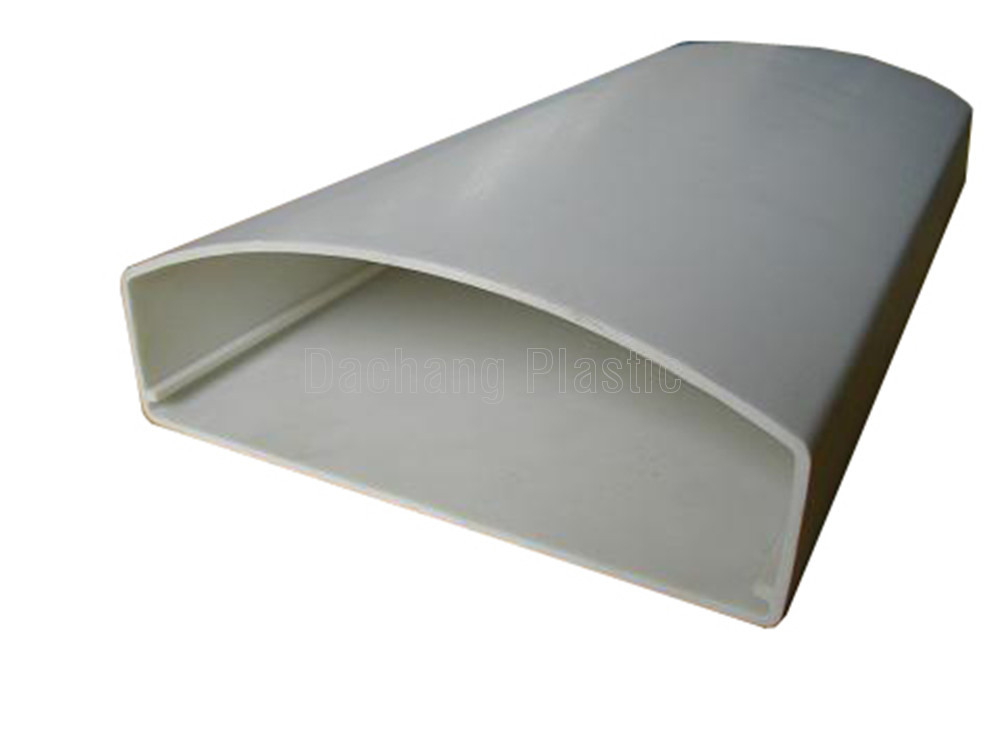
Big square PVC radome plastic profile

Big W shape PVC radome plastic profile
Dachang - Your Factory-Direct Radome Plastic Profile Manufacturer & Supplier
Dachang is a dedicated radome plastic profile manufacturer and OEM supplier extruding antenna covers from our own factory in Dongguan since 1998. Dies, extrusion and secondary processing stay under one roof, which is why a Dachang radome plastic profile sample moves on a project timeline instead of a trading-company relay.
The standard 330 × 220 mm radome section, project-specific custom sections, single / co / tri-extrusion and in-house tooling give buyers a direct engineering path from drawing review to sample approval. Maximum custom-section capability, resin selection and RF test scope are confirmed against the actual project specification before tooling.
1998
Extruding since
45 lines
Extrusion capacity
300+
Factory staff
In-house
Tooling shop
Big Radome Plastic Profile - Procurement FAQs
Q: What is the largest radome section you can extrude?
A: The current standard radome section shown on this page is 330 × 220 mm. For a larger or non-standard cross-section, send the drawing and required cut length so maximum capability, tooling feasibility, dimensional tolerance and logistics can be confirmed before quotation.
Q: Will the cover add signal loss to my base-station antenna?
A: RF impact must be measured rather than assumed. Compare the covered and uncovered antenna using the final resin grade and wall geometry at the exact operating band, with insertion loss and the agreed VSWR or return-loss change recorded under the same test condition. Where no baseline exists, test a qualification sample before releasing volume production.
Q: What's the difference between an extruded radome profile and a molded radome?
A: An extruded radome plastic profile has a constant cross-section, so one approved die can produce multiple cut lengths. It is a strong fit for long sector or panel antenna housings. Spherical, deep-draw or compound-curvature housings are not natural extrusion geometries and should be evaluated for thermoforming, molding or another process.
Q: Which material should I specify for my site?
A: Send the site environment, exact RF band, mechanical requirements and required compliance or weathering evidence. ASA, ABS and UPVC offer different balances of outdoor weatherability, impact performance and cost, but the exact resin grade and layer structure should be confirmed through the project specification and qualification test.
Q: Can you make a custom shape from our antenna?
A: Yes - custom U, square, W or bespoke cross-sections can be reviewed from your samples or drawings. Dachang's in-house tooling shop supports the path from drawing review to die development and first-article approval.
Q: Do you supply radome covers for 5G base stations and Wi-Fi access points?
A: Projects within the published 0.9–5.0 GHz range can be evaluated, but the exact operating channel must be confirmed before sample approval. Frequencies above 5.0 GHz require a separately agreed engineering and RF test scope; the published range should not be treated as automatic qualification for every 5G, microwave or Wi-Fi / WLAN channel.
Q: What compliance documents can be supplied with a custom radome order?
A: Documentation is project- and material-specific. For EU-bound programs, the quotation can identify the applicable RoHS and REACH material documentation for the selected resin, together with the current factory quality-system certificate and any agreed third-party or RF test reports. CE marking is only stated where the finished product falls within applicable EU legislation; it is not treated as a blanket certification for every extruded plastic profile.
Q: Are you a manufacturer or a trading company, and do you export?
A: Dachang is a China-based radome plastic profile factory extruding antenna covers in-house since 1998, with our own tooling shop. We export worldwide and ship factory-direct, so pricing, lead time and engineering answers come from the line that makes the part rather than a middleman.
Q: How is a radome plastic profile priced, and what are MOQ and lead time?
A: Pricing and MOQ are based on the cross-section, resin, tooling status, cut length and order volume. Qualification samples or pilot quantities can be used before volume production. Established-profile container orders are currently planned at approximately 30 days after a confirmed purchase order; new-tool schedules begin after tooling feasibility, die development and sample approval.
Q: What information is needed for a custom plastic radome quotation?
A: A quote-ready enquiry should include the cross-section drawing or antenna envelope, exact operating band, required cut length, preferred resin or site environment, first-order quantity, estimated annual demand and required RF or compliance documents. Dachang's standard radome section is 330 × 220 mm; non-standard sections require tooling-feasibility review before sample approval.