


Plastic Extrusion Profile Applications
Extruded plastic profiles for six industries, made to your own drawing
Find the extruded plastic profiles Dachang already makes for construction, automotive, lighting and electronics, medical, packaging and industrial equipment. Then send your own section drawing to our Dongguan factory for a custom quotation.
- Extrusion dies are designed and cut in our own mould workshop
- You approve real samples before any production order starts
- PVC, PC, PMMA, ABS, PP, PE, TPE and more, including co-extrusion

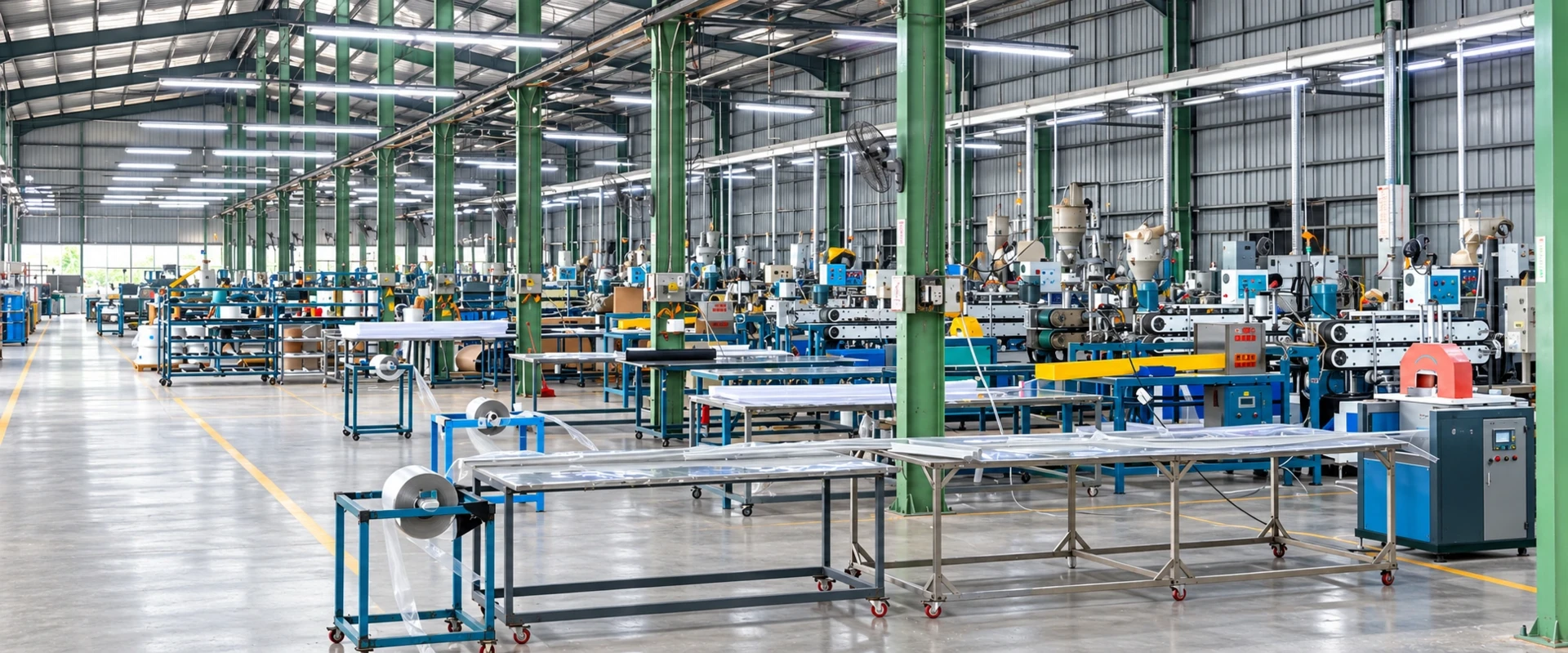
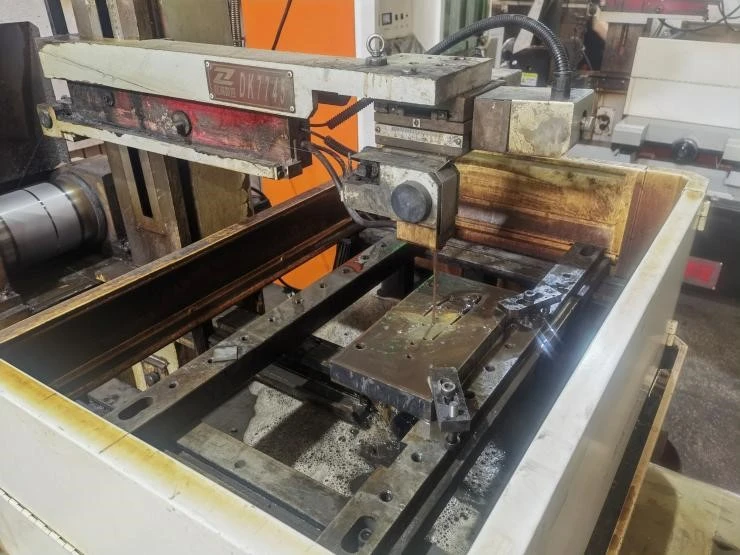
One of the extrusion lines at the Dachang plastic extrusion factory in Tangxia, Dongguan.
ApplicationsProduct linesDetails by industryMaterial guideMOQ and toolingRequest a quoteFAQ
Find extruded plastic profiles for your industry
Each card leads to the products Dachang has already extruded for that market, the materials used and what to check before a die is cut. Every figure on this page belongs to the product it is listed with, and the values for your own part are confirmed against your drawing.
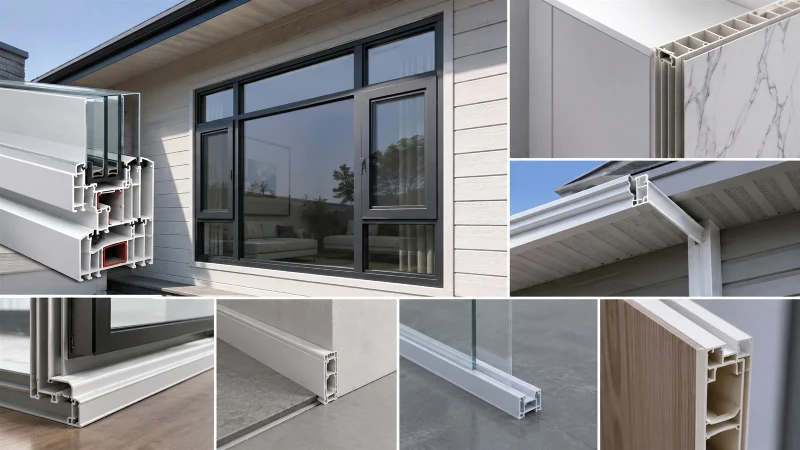
Construction and architecture
Rigid PVC building profiles, door and window sealing strips, and light covers for canopies and lobbies.
Materials: Rigid PVC, UPVC, ASA, TPE, PC, PMMA
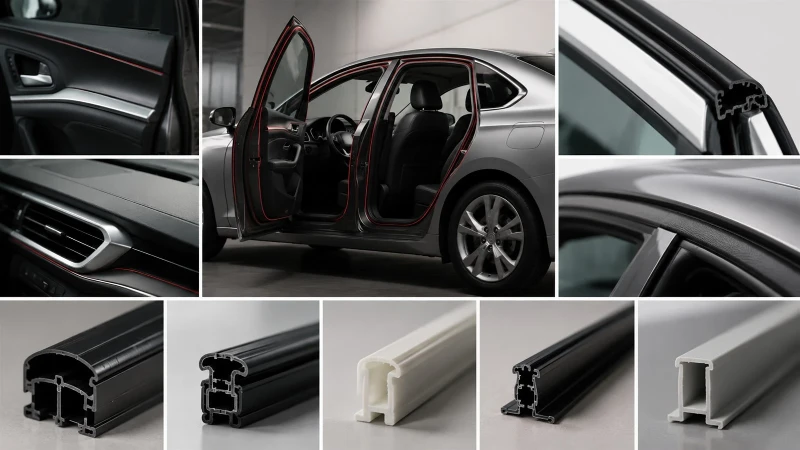
Automotive and transport
ABS border and joint trim, co-extruded PVC trim with flexible lips, and PC light covers for rail interiors.
Materials: ABS, PVC, PC/ABS, TPE, TPV
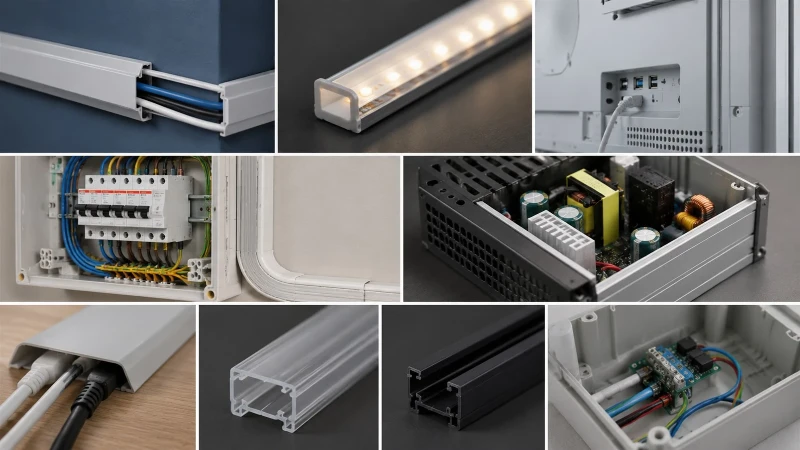
Electronics, electrical and lighting
LED strip diffusers and lenses, insulation tubes, appliance trim, cable trunking and antenna radomes.
Materials: PC, PMMA, PVC, ABS, HIPS, PPO, ASA
See electronics and lighting profiles
LED diffuser extrusions
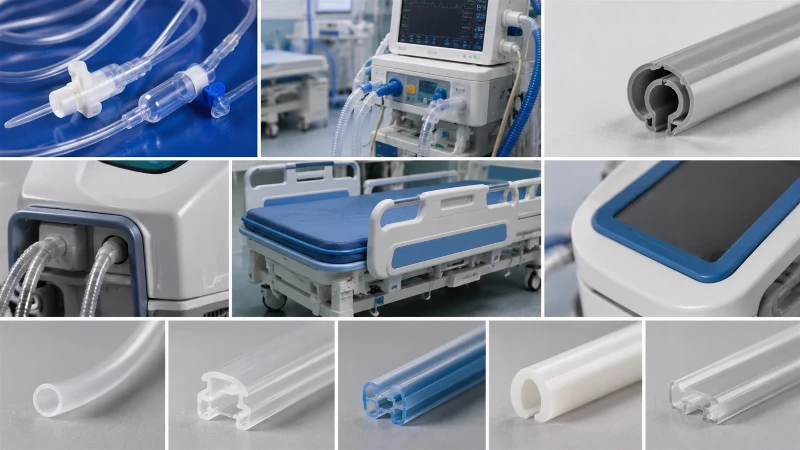
Medical and healthcare
Housing and component profiles for healthcare equipment, extruded in the resin grade you nominate.
Materials: PC/ABS, PP, specified grades
Packaging
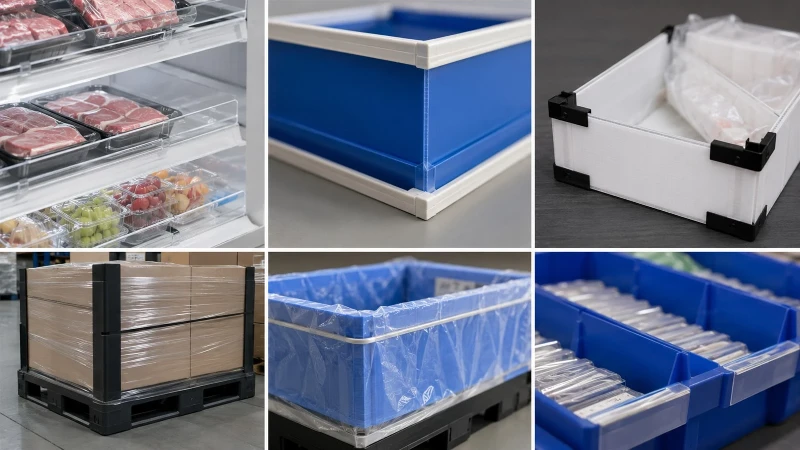
Protective ABS packaging profiles, low cost PS and PE sections, and PE tubes for fluid transfer.
Materials: ABS, PS, PE, PP
Industrial equipment and machinery
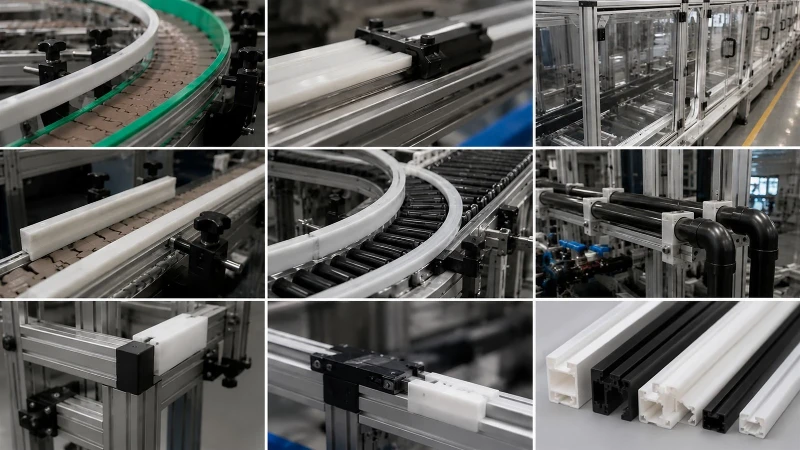
Machine guards, conveyor guides, POM slide rails, fan blades and large ABS or PPO hollow sections.
Materials: POM, PP, PE, ABS, PPO
Which Dachang product line fits your application
Start from the line that already makes parts close to yours. Most custom projects still need a new die, but the line's product pages show the materials, wall thicknesses and finishes it runs today.
| Application | What the part usually has to do | Where to start |
| Construction and architecture | Hold its shape on site, seal doors and windows, cope with weather and UV | Rigid PVC, big plastic profiles, building PC, TPE and TPV |
| Automotive and transport | Visible trim with a consistent finish, flexible sealing lips, interior light covers | ABS, co-extruded PVC, PC/ABS complex profiles |
| Electronics, electrical and lighting | Diffuse or transmit light, insulate, meet a flame classification, route cables | LED diffusers, lighting PC, lighting acrylic, plastic tubes |
| Medical and healthcare | Stay dimensionally stable, resist cleaning agents, survive sterilisation, use a documented resin | PC/ABS complex profiles, PP profiles |
| Packaging | Protect edges and contents at low material cost, carry fluids | display ABS, PS and PE profiles, PE tubes |
| Industrial equipment | Carry load, slide with low friction, resist chemicals, enclose machinery | complex profiles, POM, PP and PE, big plastic profiles |
How each industry uses custom plastic extrusions
Representative products for each market, with links to their specification pages and the questions worth settling before tooling.

Check before ordering
- Standard rigid PVC is listed for continuous use from 0 °C to 70 °C. Tell us if your part runs hotter.
- For years of direct sun, ASA or an ABS and ASA blend weathers better than standard ABS.
- Name the fire classification your building code asks for, so the resin is chosen before the die is cut.
Plastic extrusion profiles for construction and architecture
Building projects mostly need rigid sections that keep their shape on site, flexible seals for doors and windows, and covers for canopy and interior lighting. Dachang extrudes all three to your drawing, so the section, colour and cut length match your system rather than a stock catalogue.
- Environmental Construction PVC Extrusion Profiles: rigid PVC for doors, windows, panels and pipes, listed at 10 to 300 mm wide, 5 to 150 mm high, with a 1.6 mm wall.
- TPE Sealing Strip Extrusion Profiles for Doors and Windows: SEBS based TPE, soft and hard sections co-extruded in one pass. The hard section is above 80A Shore and the soft sealing face about 65A Shore.
- Rigid Extruded Plastic Profiles for Building and Plastic Extrusions for Construction Building: custom rigid channels and trims from the complex profile line.
- PC Insulated Fire-Resistant Plastic Extrusion Profile and Gas Station Lighting Lamp Cover: polycarbonate covers for building and canopy lighting.
- PMMA Light Diffuser for Lobby Building: acrylic diffuser for interior architectural lighting.
Automotive trim and seal extrusions made to your drawing
Many vehicle parts are moulded, but long border, joint and sealing areas are usually extruded. Dachang has produced ABS profiles to designs from several automotive manufacturers, and the co-extrusion lines can join a rigid carrier and a flexible lip in a single pass.
- Custom ABS trim profiles: made to customer designs in matte or glossy finish with Pantone colour matching. Standard ABS is listed for about −20 °C to 80 °C.
- Co-extruded PVC profiles: dual durometer sections for frame assemblies, automotive trim and door seals, listed for −10 °C to 70 °C.
- AC2000 PC/ABS profile: 20 × 8 mm, 1.2 mm wall, 88 g/m, listed for automotive interior components.
- TPV profile extrusion: for seals that need a higher service temperature and better compression set recovery than standard TPE.
- Plastic Light Cover for High Speed Train: polycarbonate lamp cover from the lighting PC line.

Check before ordering
- No automotive quality certification is published on our site. If your programme requires one, or customer approval documents, raise it before tooling.
- ABS can turn brittle below −20 °C. For exterior parts that see cold or sun, ask about ASA or PC/ABS.
- Send the mating part or its drawing so snap and seal geometry is checked on the sample.

Check before ordering
- Flame ratings are stated per resin and per profile, and some diffuser pages list none. Ask for the resin datasheet your certification file needs.
- Give both the light output and the hotspot appearance you can accept. Higher transmission shows more of the diode line.
- Suitable flat PC sections can be rolled for shipping. PMMA ships only in straight lengths.
Extruded profiles for electronics, electrical parts and LED lighting
Lighting covers are the largest family Dachang extrudes, and many LED channel brands and luminaire makers buy them as custom sections. The same market also covers insulation tubes, appliance trim and large halogen free profiles for telecom cable management and antenna enclosures.
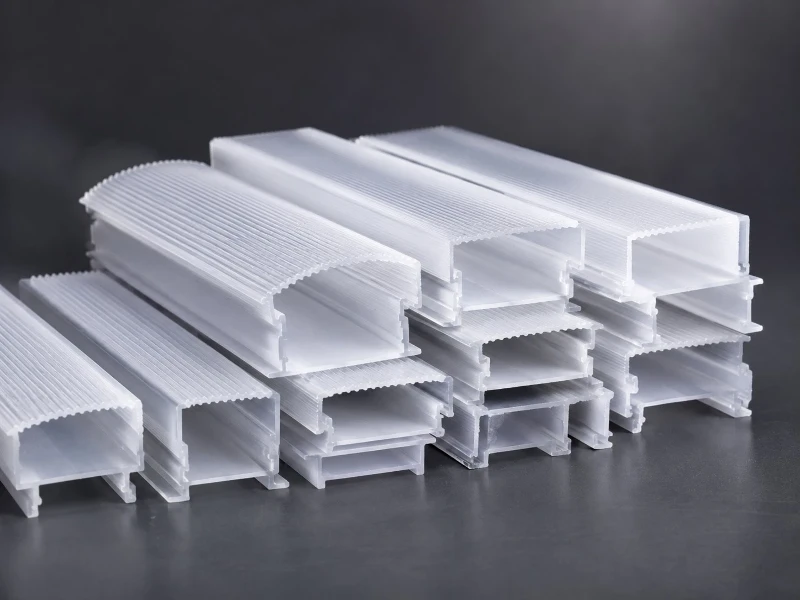
- Plastic diffusers for LED strip: more than 90 tooled PC and PMMA profiles, from a 42 mm channel cover to a 90 mm linear cover. Transmission is measured on an integrating sphere within a 50 to 95% working range.
- Plastic Linear Under Cabinet Light Cover: Panlite ML-7500ZCL, 37 × 10.2 mm, 1.5 mm wall, stated as UL 94 V-0.
- Co-extruded Polycarbonate LED Profile: clear and milky PC in one section, 40 × 15 mm, 1.5 mm wall, 75 to 90% transmission, UL94 V-2.
- Electrical Insulation Extruded Plastic Tube and Extruded Insulating Plastic Profile: insulating tube and profile for electrical assemblies.
- 300mm Wide Cable Trunk Plastic Profile: halogen free, flame retardant HIPS, PPO, ABS, ASA or PVC in 100 × 100, 200 × 100 and 300 × 100 mm ducts, cut to 1,800 or 2,000 mm.
- Big Radome Plastic Profile for Base Station Antennas: UV grade ASA, ABS or UPVC in a 330 × 220 mm section.
- Electric Appliance Extruded ABS Profiles: housings, frames and trim strips for appliance makers.
Custom profiles for medical and healthcare equipment
Healthcare buyers usually come to Dachang for housing and component profiles in engineering resins. Our site does not publish a medical device quality certification or biocompatibility data, so we treat this work as extrusion to your specification, with the resin grade and supporting documents agreed before tooling.
- AC2000 PC/ABS profile: 20 × 8 mm, 1.2 mm wall, 88 g/m, described for electronics enclosures, automotive interiors and medical device housings where dimensional stability under load and chemical contact matter. See also the Chemical Resistance PC/ABS Extrusion.
- PP extruded profiles: polypropylene is listed for steam sterilisable medical applications and holds its shape up to 150 °C without external force.
- Profiles in your nominated resin: medical and food contact parts need specific resin brands and grades, which are confirmed at quotation.

Check before ordering
- Name the medical grade resin and the documents you need from the resin supplier.
- Say whether the profile touches patients, fluids or cleaning agents, and how it is sterilised.
- Agree inspection and traceability records with the quotation rather than after the sample.

Check before ordering
- FDA grade availability describes the resin, not an approval of the finished part. Ask for the documents your market requires.
- Give the cut length and pieces per carton, because profiles are quoted by weight.
Packaging profiles and tubes in PS, PE and ABS
In packaging, extruded profiles protect edges and corners, hold products in place or carry fluids. Material cost usually decides the choice, which is why PS, PE and ABS appear most often here.
- Black Packaging Extruded ABS Profiles: rigid ABS packaging sections from the display ABS line.
- PS extruded profiles: for indoor display, packaging and light structural parts, listed at 10 to 400 mm wide and 0.7 to 4 mm thick.
- Industrial Polyethylene Profile Extrusion: PE and HDPE sections for moisture exposed and cold handling parts.
- PE plastic tubes: for fluid transfer and packaging. FDA grade PE and PP resins are listed as available.
Plastic profiles for industrial equipment and machinery
Machines and plant equipment use extrusions as guards, guides, slide rails, raceways, blades and housings. These parts are chosen for stiffness, friction, chemical resistance or sheer section size more than for looks.
- 26mm Width Extruded Plastic Profile: 26 × 24 mm, 2.3 mm wall, 240 g/m, listed for machine guards, conveyor guides and construction channels.
- Plastic Profile Extrusions for Machinery: custom sections from the complex profile line.
- POM extruded profiles: guide rails, slider channels and other low friction moving parts.
- PP Extruded Profile for Mechanical Accessories and the corrosion resistant polypropylene profile: for chemical exposure and hot fluid channels.
- PPO Hollow Plastic Profile: 200 mm wide, 0.5 to 5 m lengths, in yellow, semi clear or opal.
- 300mm Wide Big ABS Extrusion Tank: 300 × 300 mm blue high gloss ABS section for housings and containment bodies.
- Extruded ABS fan blades: light, rigid blades for factory fans as an alternative to aluminium.
- Extruded Plastic Profile for Hydroponics: custom channel profile for growing systems.

Check before ordering
- Describe the load, sliding contact and chemicals the part will see. These decide between POM, PP, PE and ABS.
- The PP, POM and PE line lists a ±0.5 mm cut length tolerance. Cross section tolerance depends on the resin and geometry.
- Large sections need crates or cartons sized to stop distortion in transit.
Not sure which profile line fits your part?
Send the section and tell us where the part works. Dachang engineers will suggest a material and check that the shape can be extruded before you pay for tooling.
More applications for our extruded profiles
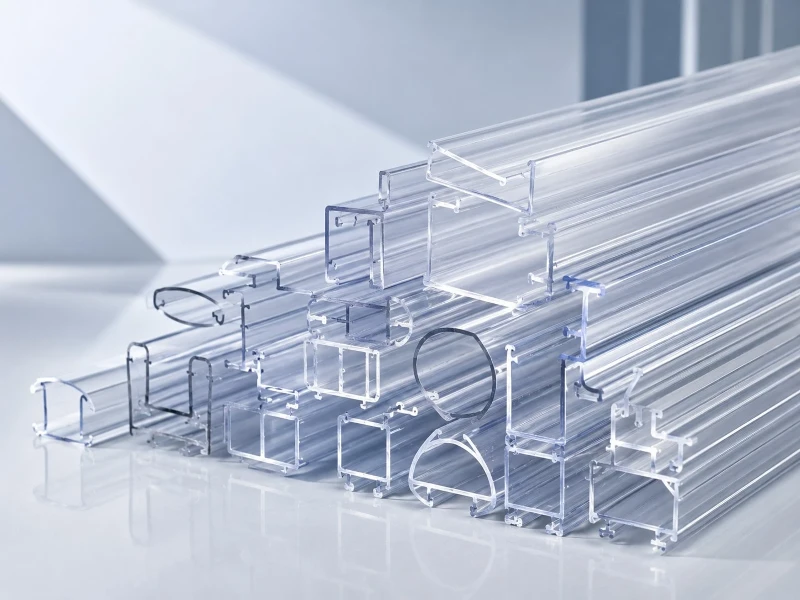
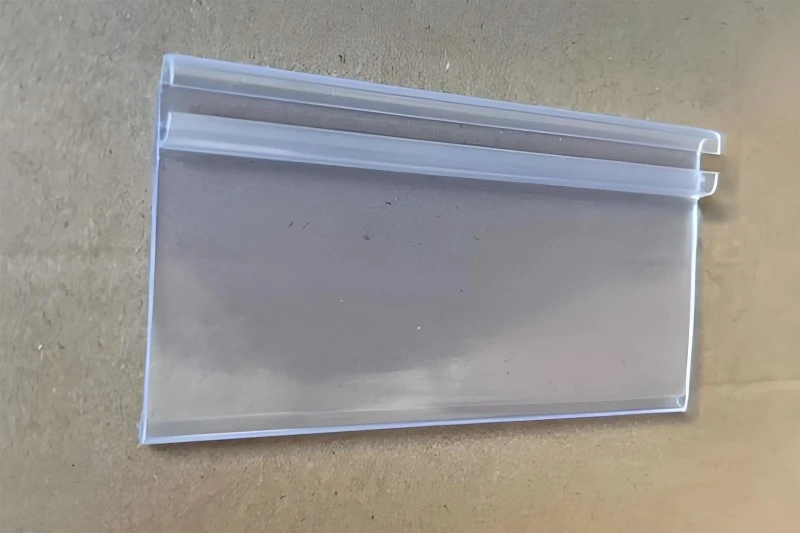
- Retail display: transparent PVC price tag profiles for supermarket and store shelves, plus display ABS profiles.
- Signage: signage acrylic profiles for illuminated letters, displays and facade trim.
- Furniture: 2800 mm ABS radius profiles for curved corner cabinets in R18 to R100 radii.
- Security and refrigeration: security gate frame profiles 2,200 mm high, and freezer lamp covers for cold rooms.
Why OEM buyers source custom plastic profiles from Dachang
Buyers who move a profile to Dachang usually want a single plastic extrusion factory that can take a drawing, cut the die and supply the part without a chain of subcontractors.
Dies made under our own roof
CNC machining, wire cutting and drilling for dies happen in the Dachang mould workshop, so sample corrections go straight from the extrusion line to the toolmakers.
Samples you approve first
Production starts only after you sign off real extruded samples for dimensions, fit and finish.
One factory for a mixed bill of materials
PVC, PC, PMMA, ABS, PP, PE, PS, HIPS, POM, TPU and TPE run on the same floor, so several profile types can share one production schedule and one container.
Co-extrusion in a single pass
Rigid and flexible, clear and milky, or two colours can be joined at the die without adhesive or a second assembly step.
Closer to a finished part
Drilling, CNC cutting, notching, chamfering, taping and printing are offered on the complex profile line, and every profile is cut to your length.
Engineering review before tooling
Wall thickness, corners and material are checked for extrusion first, which keeps die revisions and unit cost down.
Choosing a plastic for your service conditions
The application tells you which conditions matter. The comparisons below come from Dachang product line pages and are a starting point for the engineering review, not a replacement for a resin datasheet.
| Service condition | Plastics to consider | Limits to keep in mind |
| Long outdoor UV exposure | ASA or ABS and ASA blend, UV stabilised PC, anti UV PMMA | Standard ABS has poor UV resistance outdoors |
| Heat from LEDs or equipment | PC, listed for 120–130 °C continuous operation | PMMA is listed at 60–90 °C |
| Optical clarity and scratch resistance | PMMA, about 92% transmission in clear grades | Brittle and cannot be rolled for shipping |
| Impact resistance | PC, or HIPS for lower cost rigid housings | PC scratches more easily without a coating |
| Flame classification | UL 94 V-0 or V-2 PC grades, halogen free FR HIPS, PPO, ABS, ASA or PVC for trunking | Ratings apply per resin and profile, not to a whole range |
| Flexible sealing or cushioning | TPE (SEBS), TPV, soft PVC at Shore A 50–90 | ABS is rigid only, there is no soft ABS |
| Sliding and wear | POM | Confirm load and running surface at quotation |
| Cold impact and moisture | PE and HDPE, listed for moisture resistance down to −50 °C | Lower heat ceiling than PP, and ABS may turn brittle below −20 °C |
| Chemicals and hot fluids | PP, holding shape to 150 °C without external force | Lower cold impact strength than PE |
| Low cost indoor rigid parts | Rigid PVC, HIPS, PS | Rigid PVC is listed for 0–70 °C continuous use |
Tooling, MOQ and lead time by product line
Terms differ from one Dachang product line to the next, from trial runs to container orders. The table repeats what each category page states today, and your quotation confirms the terms for your own section.
| Product line | Tooling and first sample | Minimum order |
| LED diffusers | New die quoted at $400–$1,500 per cross section, with mould design and sampling within 72 hours of a confirmed drawing | From 300 kg total weight |
| Complex profiles and plastic tubes | Die and first sample within 72 hours, longer for multi cavity or co-extrusion dies | 300 kg per specification, smaller runs accepted with a set up fee |
| PVC profiles | Tooling within 72 hours after mould prepayment, complex dies may need more time | Typically 300 kg per order |
| ABS profiles | Die built after mould prepayment, samples adjusted until approved | Usually from about 300 kg, depending on profile weight |
| PP, HIPS, PS, POM, TPE, TPV and PE | Tooling about 15 days from deposit, production about 10 days after sample approval | Set by material and profile complexity |
| Big plastic profiles | Container orders about 30 days from PO when tooling exists, plus tooling time for a new die | No single minimum, varies with section size and tooling |
| PC and acrylic profiles | Custom die and first sample within 72 hours for standard complexity sections | Lower where an existing die can be reused |
Mould ownership is described differently across product lines, from buyer owned tooling to terms agreed order by order. Confirm ownership and die storage in your quotation if they matter to your programme.
How a custom extrusion project runs at our factory
Send the section
A dimensional drawing in DXF, DWG, PDF, STEP or IGES, or a physical sample of the part you buy today.
01
Engineering review and quotation
Wall thickness, corners and material are checked for extrusion, then tooling cost and unit price are quoted.
02
Die and sample in house
The die is cut in the Dachang mould workshop and first samples come off the line.
03
Your sample approval
You check dimensions, fit and finish before any production order starts.
04
Production and export packing
Profiles are cut to length and packed in cartons, wooden crates or on pallets for shipment.
05
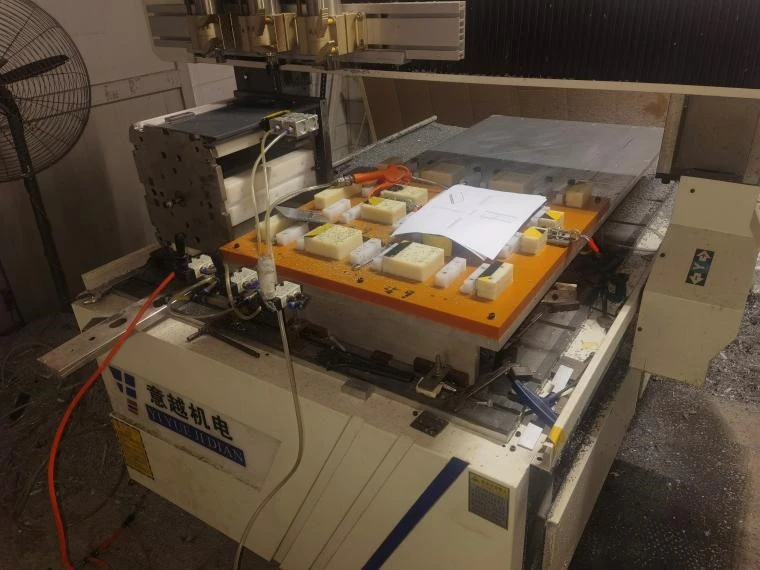
Dies are cut in our own mould workshop
CNC machining, wire cutting and drilling for extrusion dies all happen inside the Dachang factory. When a sample needs a correction, the toolmakers work next to the extrusion line, so the die is adjusted and re-run without waiting for an outside toolroom.
That is also why most product lines can quote a die and first sample within days of a confirmed drawing. Check the tooling table above for the terms of your product line.
What to send with your extrusion profile enquiry
A drawing or a sample alone is enough to start. The more of the list below you include, the fewer emails it takes to reach a firm price.
- Cross section drawing or sample, with critical dimensions and tolerances marked
- Where the part works, indoor or outdoor, temperature range and chemicals
- Material or resin grade, if your design already specifies one
- Colour as RAL or Pantone, surface finish, and target transmission for light covers
- Flame rating, RoHS, REACH, food contact or medical documents you need
- Cut length, pieces per carton and any drilling, notching or printing
- First order quantity and expected yearly volume
- Destination market and preferred trade terms
Send it to our sales team
Use the form, or email your drawing and notes directly. A sales engineer reviews the section with you before quoting.
Compliance documents available for your project
Each document proves something different, and several are tests on raw materials from resin suppliers. Check that the material named in a report is the one your profile will use.
ISO 9001 quality management system
Covers how the factory manages quality. It is not a performance rating for any single profile.
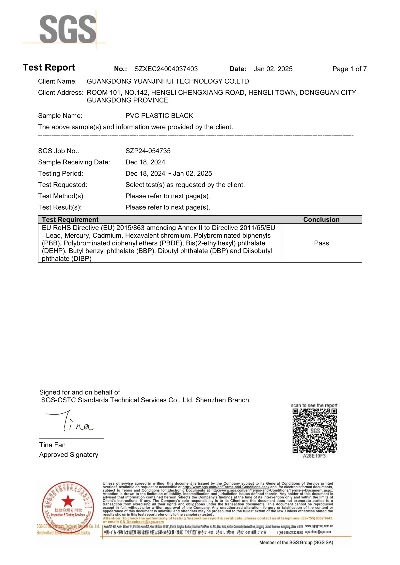
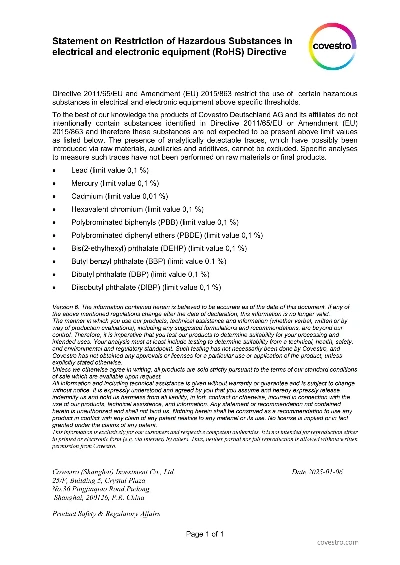
RoHS test reports
Restricted substance testing on the declared material, including the 2023 RoHS report PA-707K, a Yuanjinhui RoHS 2 report and RoHS reports for Formosa TAIRILAC ABS grades.
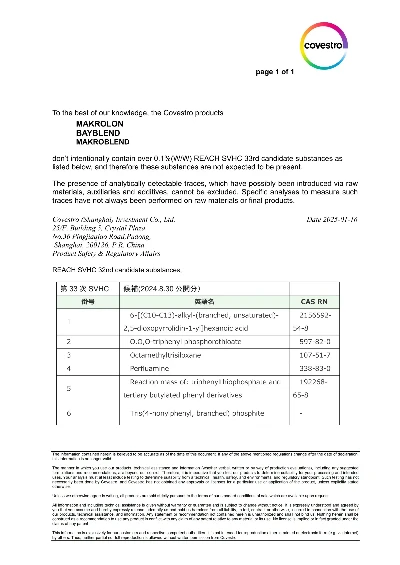
REACH SVHC report
Screened against the 33rd candidate list dated 16 January 2025. Check it against the list in force when you order.
Raw material multi test report
Phthalates, California Prop 65 lead and phthalates, REACH SVHC and EU RoHS testing on raw materials from Dongguan Tianchen Plastic Raw Materials.
PC environmental declaration
A material level environmental statement for polycarbonate, not a test on a finished profile.
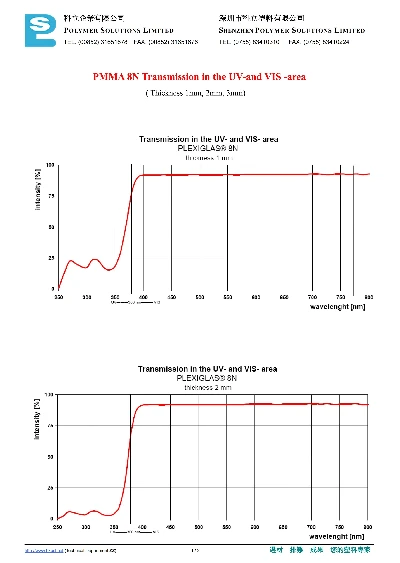
PMMA 8N anti UV report and PAHs report
UV testing on a PMMA material, and a PAHs test on Yuanjinhui materials in black, red and green.
Questions buyers ask about plastic extrusion profile applications
Q: What are plastic extrusion profiles used for?
A: They are continuous lengths with the same cross section from end to end, used wherever a long part needs one constant shape. At Dachang the main uses are construction trim and seals, automotive trim, LED light covers, electrical insulation and cable management, packaging profiles and machinery parts. Retail display, signage, security gate frames and furniture radius profiles are made as well.
Q: Is Dachang a manufacturer or a trading supplier?
A: Dachang Plastic Hardware Processing Factory runs its own extrusion lines and mould workshop at No. 47 South Business Road, Tangxia Town, Dongguan. Dies, samples and production all happen in that plant, so your engineer talks to the people who make the part.
Q: Can Dachang make a custom profile for an application not listed here?
A: Usually yes, because most of our profiles are extruded to a customer's own drawing or sample rather than taken from a catalogue. Send the section with the operating conditions and our engineers will confirm whether it can be extruded and in which plastic. Injection moulding and blow moulding are outside our scope, and panels, rods and sheets are usually not customised.
Q: Can one extruded profile combine rigid and flexible plastics?
A: Yes. Co-extrusion joins two materials at the die in one pass, with no adhesive. Combinations already made at Dachang include rigid PVC with a flexible TPE lip, soft and hard TPE sealing strips, clear PC with a milky diffusing layer, and two colour ABS.
Q: What is the minimum order for custom extruded plastic profiles?
A: It depends on the product line. LED diffusers, complex profiles, tubes and most PVC and ABS profiles start from about 300 kg, and some lines accept smaller trial runs with a set up fee. Big profiles and the PP, PS, POM, TPE and PE line set the minimum by section size and complexity. Because profiles are priced by weight, send the weight per metre or a drawing and we will convert the minimum into metres for your section.
Q: Can you deliver profiles closer to a finished part?
A: Profiles are cut to the length you specify, and the complex profile line also offers drilling, CNC cutting, notching, chamfering, taping and printing. For LED covers, matching end caps can be arranged with cooperating manufacturers. Private label packaging is offered on several product lines, so list what you need in your enquiry.
Q: Can you make profiles for food contact or medical use?
A: These parts need specific resin brands and grades, and FDA grade PE and PP resins are listed as available. Our site does not publish a medical device or food contact certification for finished profiles, so state the regulation and the documents you need at the quoting stage.
Start your custom plastic extrusion project with Dachang
Tell us the application, the section and the quantity. A drawing, a sample or even the weight per metre is enough for our engineers to review the material and die design with you before quoting.