

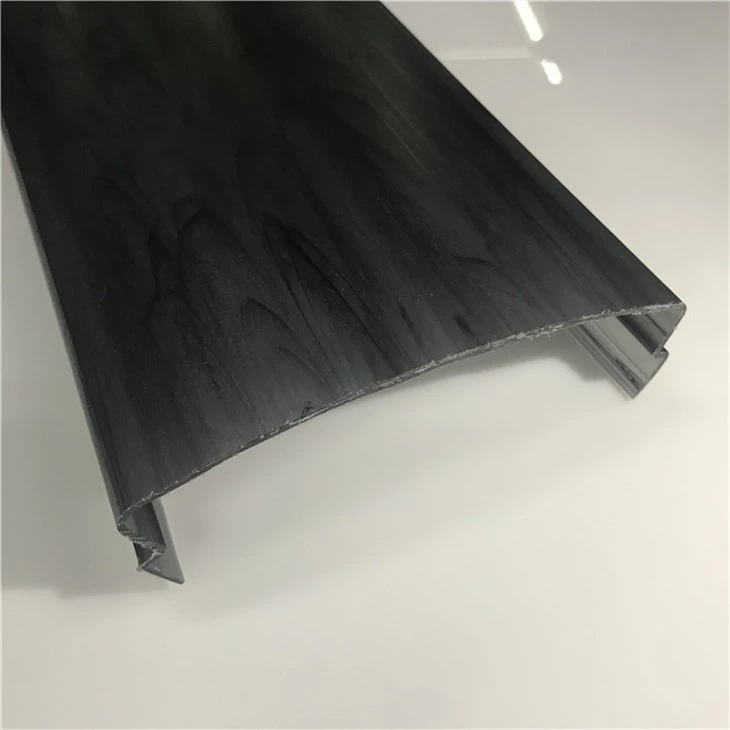


Corrosion Resistant Polypropylene Profile Extrusion for Harsh Chemical Environments
Superior Chemical Stability for Demanding Industrial Environments
Acid & Alkali Resistant | Chemical Industry Grade | 72-Hour Mold Delivery | ISO 9001 Certified
When standard plastic profiles fail in aggressive chemical environments, our corrosion resistant polypropylene (PP) extruded profiles deliver exceptional performance. Specifically engineered for applications where acid resistance, alkali stability, and organic solvent compatibility are critical, these custom PP profiles provide a cost-effective alternative to expensive specialty metals or coated materials.
At Dachang Plastic, we specialize in manufacturing custom chemical resistant PP profile extrusions for laboratories, chemical processing plants, food & beverage facilities, and pharmaceutical manufacturing. With over 25 years of extrusion expertise and ISO 9001:2000 certification, we deliver precision-engineered polypropylene profiles that meet the most demanding corrosion resistance requirements.
Technical Specifications
| Material | Polypropylene (PP) - Homopolymer / Copolymer Grades Available |
| Color | Natural White / Black / Custom RAL Colors |
| Profile Height | 5mm ~ 100mm |
| Profile Width | 10mm ~ 400mm |
| Wall Thickness | 0.7mm ~ 4mm |
| Density | 0.90 - 0.91 g/cm³ |
| Heat Resistance | Continuous use up to 100°C (Melting point: 130°C - 165°C) |
| Cutting Tolerance | ±0.5mm |
| Mold Development | 10-15 days (Express Service: 72 hours) |
| Production Lead Time | 10 days |
| Packaging | Carton box or plywood box (Custom packaging available) |
Chemical Resistance Properties
The exceptional chemical stability of polypropylene profiles makes them ideal for corrosive environments:
| Chemical Category | Specific Chemicals | Resistance |
|---|---|---|
| Acids | Hydrochloric acid, Sulfuric acid (dilute), Nitric acid (dilute), Phosphoric acid, Acetic acid | ★★★★★ Excellent |
| Alkalis | Sodium hydroxide, Potassium hydroxide, Ammonia solutions, Calcium hydroxide | ★★★★★ Excellent |
| Organic Solvents | Alcohols (methanol, ethanol), Ketones, Esters, Most organic acids | ★★★★☆ Good to Excellent |
| Salt Solutions | Sodium chloride, Potassium chloride, Most metal salt solutions | ★★★★★ Excellent |
| Oxidizing Agents | Hydrogen peroxide (dilute), Chlorine water, Bleaching solutions | ★★★★☆ Good |
Note: Concentrated sulfuric acid and strong oxidizing agents at high concentrations may affect PP. Contact our technical team for specific chemical compatibility assessments.
Available PP Grades for Different Applications
| PP Homopolymer | Higher rigidity, better chemical resistance - ideal for structural profiles in chemical processing |
| PP Copolymer | Better impact resistance, improved low-temperature performance - suitable for demanding mechanical environments |
| Food Grade PP | FDA compliant, odorless, non-toxic - for food contact applications |
| Medical Grade PP | Biocompatible, steam sterilizable at 121°C - for medical devices and laboratory equipment |
| Glass Fiber Reinforced PP | Enhanced rigidity and dimensional stability - for high-load structural applications |
| UV Stabilized PP | Enhanced outdoor durability with UV stabilizer additives - for exterior applications |
Why Choose Corrosion Resistant PP Profiles Over Metal or PVC?
PP vs. Metal Profiles
- No additional coatings required - PP is inherently corrosion resistant, eliminating coating maintenance costs
- 70% lighter weight - Density of 0.90-0.91 g/cm³ reduces transportation and installation costs
- Lower material cost - Significant savings compared to stainless steel or specialized alloys
- No rust or oxidation - Maintains integrity in humid and wet conditions
PP vs. PVC Profiles
- Superior chemical resistance - PP withstands acids and solvents that degrade PVC
- No plasticizers required - PVC needs additives that can leach under chemical exposure
- Higher heat resistance - PP handles temperatures up to 165°C vs. PVC's ~60°C
- Environmentally safer - PP releases only CO₂ and water when burned; PVC releases toxic chlorine gas
Available Corrosion Resistant PP Profile Shapes
Standard Profile Shapes:
- PP U-Channel Profiles (acid-resistant channels)
- PP C-Channel Profiles
- PP H-Channel Profiles
- PP J-Channel Profiles
- PP T-Section Profiles
- PP L-Angle Profiles
- PP Square & Rectangular Tubes
- PP Round Tubes & Pipes
Custom Profile Capabilities:
- Complex cross-section geometries
- Multi-cavity hollow profiles
- Co-extruded multi-material profiles
- Profiles with integrated sealing lips
- Snap-fit connection profiles
- Specialized laboratory equipment profiles
Competitive advantage
The company conducted a competitive advantage analysis to identify its strengths and weaknesses compared to its rivals.
Chemical Processing & Laboratories
Chemical equipment linings and protective channels
Laboratory bench edge profiles and acid-resistant trim
Fume hood components and ducting profiles
Chemical storage tank accessories
Corrosion resistant pipe supports and hangers
01
Food & Beverage Processing
Food-grade conveyor guide rails
Hot fluid transfer tubing profiles
Processing equipment frames and guards
Hygienic wall and ceiling trim profiles
Autoclave-compatible equipment components
02
Pharmaceutical & Medical
Clean room partition profiles
Steam-sterilizable equipment components
Medical device housing profiles
Pharmaceutical packaging line guides
Laboratory sample handling systems
03
Industrial Manufacturing
Electroplating line components
Acid bath equipment profiles
Chemical-resistant machine guards
Water treatment facility components
Battery manufacturing equipment parts
04
Water Treatment & Environmental
Chlorinated water system profiles
Wastewater treatment equipment
Desalination plant components
pH adjustment system profiles
Chemical dosing equipment parts
05
Key Advantages of Polypropylene Profile Extrusion
Advantages:
Excellent Chemical/Corrosion Resistance - Stable against acids, alkalis, and organic solvents
Lightweight - Low density (0.90-0.91 g/cm³) reduces shipping and installation costs
Good Heat Resistance - Operating range up to 100°C continuous
Superior Fatigue Resistance - Excellent for living hinges and repeated stress applications
Good Electrical Insulation - High dielectric strength for electrical applications
Food & Medical Safe - FDA compliant grades available; steam sterilizable
Weldable - Can be hot air or ultrasonic welded for assembly
Recyclable - Environmentally friendly; lower carbon footprint than PVC
Considerations:
- UV Sensitivity - Requires UV stabilizers for outdoor applications (available upon request)
- Flammability - Standard PP is flammable; flame-retardant grades available
- Low Temperature Brittleness - May become brittle below -20°C (copolymer grades perform better)
Corrosion Resistant PP Profile Extrusion Pictures


FAQ
Q: What chemicals can corrosion resistant PP profiles withstand?
A: Our polypropylene profiles demonstrate excellent resistance to most acids (hydrochloric, sulfuric-dilute, nitric-dilute, phosphoric), alkalis (sodium hydroxide, potassium hydroxide), salt solutions, and many organic solvents. Only concentrated sulfuric acid and certain strong oxidizers at high temperatures may affect PP.
Q: What is the difference between PP Homopolymer and Copolymer?
A: PP Homopolymer offers higher rigidity and better chemical resistance - ideal for structural profiles. PP Copolymer provides better impact resistance and improved low-temperature performance - suitable for applications requiring toughness alongside corrosion resistance.
Q: Are your PP profiles suitable for food contact applications?
A: Yes. We offer food-grade polypropylene profiles that are FDA compliant, odorless, tasteless, and non-toxic. Material certifications are provided upon request.
Q: Can PP profiles be steam sterilized for medical or laboratory use?
A: Yes. Medical-grade polypropylene can be steam sterilized (autoclaved) at temperatures up to 121°C. PP is hypoallergenic and biocompatible.
Q: How fast can you deliver custom PP profile molds?
A: Our express mold service delivers custom mold design and sampling within 72 hours. Standard mold development takes 10-15 days. Production lead time after mold approval is typically 10 days.
Tooling/Mold Development
We can develop custom tooling/molds according to your drawings. Standard lead time is 15 days, with our express 72-hour service available for urgent projects. We will send samples for your approval before starting production.
Packaging: Customized cartons, cardboard, wooden cases, pallets and label paper according to customer requirements.
Trade Terms: EXW / FOB / FCA