


Plastic profiles are one of the fundamental materials in modern manufacturing. The construction industry uses them for door and window frames, the automotive industry uses them for sealing strips, and electronic products need them for casings-their applications are extremely wide-ranging. Compared to traditional metal profiles, plastic profiles have significant advantages such as light weight, corrosion resistance, good insulation, and high design freedom. Coupled with their outstanding cost-effectiveness, they have gained widespread use in numerous fields.
Understanding the Basic Concepts and Principles of Custom Plastic Profiles
Plastic profile extrusion is a continuous manufacturing process: thermoplastic material is heated and melted, then pushed through a die of a specific shape by a screw to form a long strip product with a constant cross-section.
The unique aspect of this process is its continuity-theoretically, profiles of unlimited length can be produced and then cut to the required dimensions. This makes extrusion molding highly efficient and cost-effective in producing products such as pipes, strips, channels, and sealing strips, and also allows for the customization of plastic extrusion profiles of various shapes.
Let me tell you about the classification of plastic profile structures
Plastic profiles are mainly divided into four categories: open profiles (such as U-shaped channels and L-shaped angles), closed profiles (such as square tubes and multi-cavity profiles), tubes and rods, and irregular-shaped profiles.

Plastic vs. Metal Profiles
The advantages of plastic profiles are evident:
Design Freedom: Plastics can be molded into extremely complex shapes and are easy to color, eliminating the need for post-painting.
Weight Advantage: Plastics are typically only one-sixth to one-third the density of metals, significantly reducing transportation and installation costs.
Unique Corrosion Resistance: Unlike metals, plastics do not rust or corrode by chemicals, resulting in a longer lifespan in harsh environments.
Insulation Properties: Plastics are excellent electrical and thermal insulators, offering natural advantages in electrical and insulation applications.
Lower Cost: Both raw material and processing costs are generally lower for plastics than for metals.
Of course, plastic profiles also have limitations: their mechanical strength and rigidity are usually inferior to metals; their high-temperature resistance is limited, with most thermoplastics softening above 100°C; some plastics will age and degrade under ultraviolet light; and their creep characteristics make them unsuitable for applications that bear constant loads for a long time.
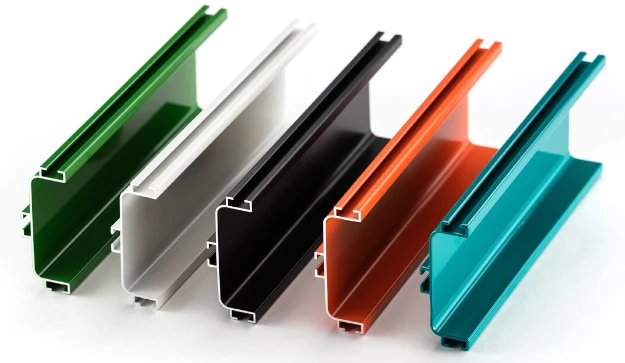
Want to know what kinds of plastic materials are available?
Guess which high-performance engineering plastic boasts exceptional impact resistance and optical transparency? Its impact strength is approximately 200 times that of ordinary glass and over 30 times that of acrylic, making it the preferred choice for safety glass, protective face shields, and bulletproof materials. Its optical transparency is close to that of glass, with a light transmittance approaching 89%. That's right, it's polycarbonate (PC). Its operating temperature range, dimensional stability, electrical insulation properties, and flame retardant properties are also satisfactory.
However, PC has disadvantages such as being sensitive to notches, prone to stress cracking, and having only moderate chemical resistance, meaning it cannot come into contact with strong alkalis, ketones, or esters. It also requires thorough drying during processing; otherwise, hydrolytic degradation will occur.
For lighting and building projects that need this balance of clarity and impact strength, Dachang's custom polycarbonate profile range covers milky, semi-clear, and transparent extrusion grades.
Polyvinyl chloride (PVC) is one of the most widely used materials in the plastic profile industry. Doesn't it appear frequently in our lives? For example: PVC cards; PVC labels; PVC wire; PVC curtains; PVC coated welded wire mesh; PVC foam boards; PVC ceilings; PVC water pipes; PVC skirting boards; as well as conduits, cable insulation, plastic doors and windows, and plastic bags. Rigid PVC can be used for pipes, doors, and windows. It can also be used for bottles, other non-food packaging, and bank cards or membership cards. It can also be made flexible by adding plasticizers - historically ortho-phthalates, though export-grade flexible PVC has largely moved to non-phthalate plasticizers such as DOTP (see compliance note below) - to create flexible PVC, making it more adaptable. In this form, it can be used for flexible pipes, cable insulation, imitation leather, flexible signage, inflatable products, and replaces rubber in many applications. Dachang's soft PVC profile line covers exactly this range, from sealing strips and gaskets to door and automotive trim profiles.
Guess what the ideal plastic material is for products prioritizing aesthetics? I think it's acrylonitrile-butadiene-styrene (ABS). It's an engineering-grade thermoplastic copolymer made from three monomers: acrylonitrile provides chemical stability and heat resistance, butadiene provides toughness and impact resistance, and styrene provides rigidity and processability. We all know that a composite is more powerful.
ABS has a very well-balanced overall performance: sufficient mechanical strength, excellent impact resistance (even at low temperatures), excellent dimensional stability, and a wide operating temperature range (-40°C to 85°C). Its clean surface finish makes it easy to electroplate and paint, making it ideal for products seeking a high-quality appearance. What else can it be used for? It's used in automotive interior and exterior parts, electronic product housings, pipe fittings, tool handles, and more. See Dachang's custom ABS profile catalog for extruded housings, trim strips, and curved-corner options in these grades.
We know nothing is perfect: it has relatively poor weather resistance and will discolor and degrade with prolonged exposure to sunlight. However, this isn't a major concern because UV stabilizers can be added for outdoor applications, or ASA (acrylonitrile-acrylate-styrene) can be used as a substitute.

I know there are other plastic materials:
- Polyethylene (PE) can be classified into several types based on density and molecular structure, including low-density polyethylene (LDPE), medium-density polyethylene (MDPE), and high-density polyethylene (HDPE).
- Polypropylene (PP) is widely used in chemical pipelines and containers due to its chemical resistance, resisting most organic solvents, acids, and alkalis.
- There is also a special material that combines the elasticity of rubber with the processability of plastics, filling the gap between traditional plastics and vulcanized rubber; this is thermoplastic elastomer (TPE/TPO/TPU).
However, we can't include everything. There are also specialized plastic profiles and profiles designed for different industry environments. I know of a few: polyamide (PA/nylon), polyoxymethylene (POM), and polyethylene terephthalate (PETG).
How to Choose the Right Material: A Selection Framework
Knowing what each polymer is matters less than knowing where it fails. Most profile projects go wrong at one of four boundaries: continuous service temperature, outdoor UV exposure, flammability requirements, or chemical contact. The table below compares the resins used in extrusion against those decision points. Treat the temperature and UL 94 figures as grade-dependent starting points - the exact value belongs on the material datasheet and, for flammability, on the UL Yellow Card.
| Material | Continuous service temp (approx.) | Typical UL 94 (unfilled) | Outdoor / UV | Relative cost | Fits best | Watch out for |
|---|---|---|---|---|---|---|
| Rigid PVC (uPVC) | up to ~60 °C | V-0 achievable | Good (with stabilizers) | Low | Window/door frames, trim, conduit | Brittle below 0 °C; impact drops in cold |
| ABS | −40 to ~85 °C | HB (FR grade V-0 @1.6 mm) | Poor - yellows | Medium | Housings, cosmetic trim, plated parts | Discolors within months of direct sun unless UV-stabilized |
| ASA | −40 to ~85 °C | HB | Excellent | Medium | The outdoor answer to ABS | Slightly lower impact than ABS |
| Polycarbonate (PC) | up to ~115–120 °C | V-2 to V-0 (grade-dependent) | Good (UV-cap grades) | High | LED diffusers, glazing, machine guards | Notch-sensitive; stress-cracks against ketones/esters/strong alkalis; must be dried before extrusion |
| PMMA (acrylic) | up to ~70–80 °C | HB | Excellent | Medium | Optical lenses, signage, light guides | Brittle; poor solvent resistance |
| Polypropylene (PP) | up to ~100 °C | HB (FR available) | Poor unless stabilized | Low | Chemical ducting, living hinges | Low stiffness; hard to bond/paint |
| HDPE | −50 to ~80 °C | HB | Moderate | Low | Wear strips, outdoor covers | Low rigidity; bonding requires surface treatment |
A working decision path: start from the hardest constraint, not the cheapest resin. Outdoor plus load-bearing points to ASA or UV-stabilized PC, not standard ABS. Optical clarity plus impact resistance points to PC over PMMA. Aggressive chemical service points to PP or PVDF over PVC. Only after the constraint is satisfied do you optimize on cost - reversing that order is how a plated ABS trim ends up chalking on a customer's outdoor sign within a season.
For a deeper breakdown of processing windows, shrinkage rates, and compliance mapping by material, see our extrusion material selection guide.
- Colorants are used to give products the desired color. Color masterbatches in masterbatch form are the most convenient to use and can precisely control color consistency.
- UV stabilizers absorb or block ultraviolet rays, preventing plastics from discoloring and becoming brittle due to photoaging. These are essential for outdoor products.Antioxidants prevent oxidative degradation of plastics during processing and use.
- Flame retardants reduce the flammability of materials to meet specific fire resistance requirements. Common types include halogenated flame retardants and halogen-free flame retardants, the latter being more environmentally friendly.
- Plasticizers make rigid plastics more flexible, mainly used in PVC.
- Lubricants improve processing flow and reduce mold adhesion.
- Fillers can reduce costs and improve rigidity and dimensional stability.
- Reinforcing fibers can significantly improve the strength and rigidity of materials, such as glass fiber and carbon fiber.

Compliance and Certification for Exported Profiles
For anyone shipping profiles into the EU or North America, material compliance is now a gating requirement, not a footnote. Under REACH Annex XVII, flexible PVC containing DEHP, DBP, BBP or DIBP above 0.1% by weight cannot enter the EU market without specific authorization, and the restriction has been extended across consumer articles. In practice, that has pushed the industry toward DOTP, a non-phthalate plasticizer that clears the current EU, US, Japan and South Korea phthalate rules without authorization or warning-label burden. If your flexible PVC profile is bound for a regulated market and the datasheet still lists an ortho-phthalate, that is a supply-chain risk to resolve before the PO, not after.
Four documents cover most B2B profile programs, and a capable supplier should provide them on request:
- RoHS / REACH declarations - for electronics-adjacent and consumer applications (restricted substances, SVHC content).
- UL 94 Yellow Card - for any part in or near an electrical assembly. Note the rating is a material-plus-thickness combination: a resin rated V-0 at 3 mm may only reach V-2 at 1.5 mm, so verify the rating at your part's minimum wall thickness, not the datasheet's best case. (UL 94 is harmonized with IEC 60695-11-10/-20 and ISO 9772/9773.)
- FDA food-contact or medical documentation - for packaging, tubing, or healthcare housings.
- Certificate of Compliance / material certs per shipment for regulated programs.
One field-level pitfall the datasheets won't flag: don't install soft PVC (cable insulation, gaskets) in direct contact with PC or PMMA profiles. The plasticizers migrate at elevated temperature and can trigger stress cracking in the amorphous plastic - a slow failure that shows up months into service, common in lighting fixtures where PVC-insulated wiring sits against a PC diffuser.
Come and experience the extrusion process together
Raw Material Preparation
This stage includes raw material drying (essential for hygroscopic materials), color matching, and premixing with additives. The quality and consistency of the raw materials directly affect the final product.
Feeding and Plasticizing Stage
Plastic granules enter the extruder barrel from the hopper. Under the conveying and shearing action of the screw, combined with the heat provided by the barrel heater, they gradually melt into a homogeneous viscous fluid. This process requires precise control of the temperature profile and screw speed.
Extrusion Molding Stage
A uniform molten plastic is propelled by the screw and enters the die through the die head. As the melt flows within the die, it is shaped into the desired cross-sectional shape. Die temperature control is crucial for product quality.
Cooling and Shaping Stage
The profile, immediately after leaving the die, is in a softened state and must be rapidly cooled to solidify its shape. The shaping device also serves to correct dimensions. The cooling rate needs to be balanced-too fast may create internal stress, while too slow will affect production efficiency.
Traction and Cutting Stage
The fully cooled profile is pulled out at a stable speed by the traction device and then cut to the set length. Cutting accuracy and kerf quality are crucial in this stage. (However, extruded plastic profiles often require further processing and finishing to meet the needs of the final application.)
Inspection and Packaging Stage
The finished product undergoes quality control procedures such as dimensional inspection and visual inspection. Only after passing these procedures are it packaged and stored.

Tolerances and First-Article Approval: What to Put on Your Drawing
The most common sourcing mistake with a custom profile is under-specifying the drawing and then being surprised by the parts. Extrusion is a soft-tooled, thermally driven process - dimensions drift with melt temperature, line speed, cooling, and even ambient humidity. General tolerances for extruded profiles are governed by DIN 16941-2A/2B; where a drawing says nothing, these apply by default:
| Feature | Nominal size | General tolerance (2A/2B) |
|---|---|---|
| Wall thickness | up to 1.2 mm | ± 0.2 mm |
| Wall thickness | 2.5–4 mm | ± 0.4 mm |
| Wall thickness | above 10 mm | ± 8 % |
| Cross-section dimension | up to 3 mm | ± 0.3 mm |
| Cross-section dimension | 30–50 mm | ± 0.8 mm |
| Cross-section dimension | 120–250 mm | ± 1.2 mm |
Tighter tolerances are possible - leading extruders quote down to roughly ±0.13 mm (±0.005″) on controlled dimensions - but tightening every dimension inflates tooling cost and scrap. The discipline is to tag only the two or three dimensions that drive fit or function as critical, and let the rest ride on the general table.
Before a new profile goes to production, expect a defined approval loop: the toolmaker issues an adjustment drawing off your print for sign-off, produces first samples, and can supply a First Article Inspection (FAI) report against that drawing on request. Don't skip the functional check - provide a mating gauge or the actual counterpart so fit is verified in the real assembly, not just on the measuring table. A profile that measures in-tolerance can still fail to clip into its channel if the installation state wasn't checked. Also budget for tool lead time and a minimum run: soft tooling and the setup/scrap of a first run are why extrusion MOQs exist, so confirm both tooling timeline and MOQ before you commit a program.
For the wall-thickness, corner-radius, and fillet rules that keep a profile within these tolerances in the first place, our DFM design guide for plastic extrusion covers the geometry side of the equation.
Surface treatment and secondary processing of plastic profiles
Machining:
Cutting, bevel cutting, and V-cutting can also be done using circular saws, band saws, laser cutting, or waterjet cutting.
Drilling: Requires a drill bit suitable for the plastic, controlling the spindle speed and feed to avoid overheating and melting. For mass production, multi-axis drilling machines or CNC machining centers are commonly used.
Punching: Similar to grooving, suitable for holes and slots of regular shapes. Can be done online (continuous punching during extrusion) or offline (machining on the cut profile).
Tapping: Can machine internal threads on plastic, but plastic threads have limited strength; for high-load applications, consider embedding metal threaded inserts.
Milling and Turning: Used for machining more complex shapes. The machining parameters for plastics differ from those for metals, requiring higher cutting speeds and proper cooling.
Bending: Some plastic profiles can be bent after being softened by heating. The bending radius depends on the material properties and wall thickness.
Surface Finishing
- Spraying: The process of applying a paint layer to the surface of profiles, which can change color, increase gloss, or achieve special effects.
- Electroplating: Giving plastic surfaces a metallic appearance and certain metallic properties.
- Laser marking: Printing on products and creating permanent marks on plastic surfaces through physical or chemical changes.
- Laminating and coating: Applying films or coatings to the surface of profiles to enhance the visual appeal of the product.
- Chemical etching or laser engraving creates a specific texture on the inner surface of a mold, known as "textured pattern." Common texture types include leather grain, wood grain, sandblasting, and geometric patterns.

The depth and fineness of the texture can be adjusted to achieve different tactile and visual effects. The advantage of textured patterns is that the texture is formed during the molding process and will not peel or wear off, providing a permanent surface effect.
Assembly and Welding
- Welding (hot plate welding, ultrasonic welding, hot air welding, laser welding) is an important method for joining plastic profiles.
- Adhesive bonding uses specialized plastic adhesives.
- Mechanical connections include screw connections, riveting, and snap-fit connections.
What are the application areas of plastic profiles?
Plastic profiles are used in almost every aspect of industry and our daily lives.
- Construction and Building Materials: PVC door and window frames
- Automotive and Transportation: Door sealing strips, window guide channels, body trim strips, interior trim, etc. Plastic profiles are also widely used in rail transportation, aviation, and shipbuilding for interior decoration, sealing and protection, and electrical insulation.
- Electronics and Electrical: Cable trays, conduits, insulating sleeves, heat sink covers, etc. The LED lighting industry has also spurred the development of light-diffusing profiles.
- Furniture and Commercial Display: T-shaped strips, U-shaped channels, corner joints, tables and chairs, shelves, etc.
- Medical and Healthcare: Medical equipment housings, hospital bed railings, pharmaceutical packaging, disposable medical devices, etc.
- Agriculture and Industry: Greenhouse frames, irrigation pipes, seedling tray frames, etc. Industrial applications include conveyor system rails, machinery guards, safety railings, etc.
With technological advancements and expanded applications, the plastic profile industry continues to evolve. Staying focused on new materials, processes, and applications will help make better choices in design and manufacturing, creating greater value.
FAQ
Q: What tolerance can I expect on a custom extruded plastic profile?
A: For standard profiles, expect DIN 16941-2A/2B general tolerances: roughly ±0.2 mm on walls under 1.2 mm, ±0.4 mm on walls of 2.5–4 mm, and ±0.3 to ±1.2 mm on cross-section dimensions from 3 mm up to 250 mm. Tighter control - down to about ±0.13 mm (±0.005″) - is achievable on selected dimensions with dedicated tooling, but not economically on every feature at once. This suits precision fits and mating assemblies, but it is not the right spec for a decorative trim where a looser general tolerance keeps tooling and scrap costs down. The practical move is to tag only the two or three fit-critical dimensions as tight and let the rest follow the general table, then confirm the result with a first-article inspection against the approved drawing.
Q: Is phthalate-plasticized PVC still allowed for exported products?
A: For flexible PVC entering the EU, no - not if DEHP, DBP, BBP or DIBP exceeds 0.1% by weight, absent specific authorization; the US has finalized restrictions on eight ortho-phthalates as well. This applies to flexible PVC specifically: rigid (unplasticized) PVC profiles contain no plasticizer and are largely unaffected, which is a genuine selection lever - if the application allows a rigid profile, the whole phthalate question disappears. Where flexibility is required, DOTP is currently the only large-volume plasticizer that satisfies the EU, US, Japan and Korea phthalate rules simultaneously without authorization or labeling. The time to confirm the plasticizer grade is before the purchase order, by requesting the REACH declaration, not after a customs hold.
Q: Which material should I avoid for an outdoor profile, and why?
A: Three failure modes account for most outdoor profile complaints. First, standard ABS: it has no meaningful UV resistance and will chalk and yellow within months of direct sun - the fix is ASA or a UV-stabilized grade, not "premium" ABS. Second, un-stabilized PP and HDPE embrittle under UV over time; specify a stabilized grade for anything with a multi-year outdoor life. Third, a subtler one specific to lighting and enclosure assemblies: soft PVC placed against a PC or PMMA profile leaches plasticizer at operating temperature, and the migrating plasticizer stress-cracks the amorphous part - a delayed failure that surfaces well after installation. If a design pairs flexible PVC with a clear PC lens, separate them or switch the seal to EPDM or non-plasticized material. Each of these is cheap to prevent at the drawing stage and expensive to discover in the field.